Time for a reality check on salaries

standing on coins

That one of the chief concerns among law firm leaders in Legal Business’ annual Global London report is the retention of talent and the salaries required to do that in an ultra-competitive recruitment market is of course not ground-breaking news. Pundits have for years bandied around the term ‘the war for talent’, and with ever-more frequency in connection with demand for deal lawyers as the seemingly unstoppable private equity boom continues apace.

But when these phrases take hold they tend to stick and get churned out at every available opportunity when senior lawyers talk about the manifold challenges facing their businesses. Critical as the pipeline of talent unquestionably is, now that there is a real war on, the term seems hyperbolic. Continue reading “Time for a reality check on salaries”
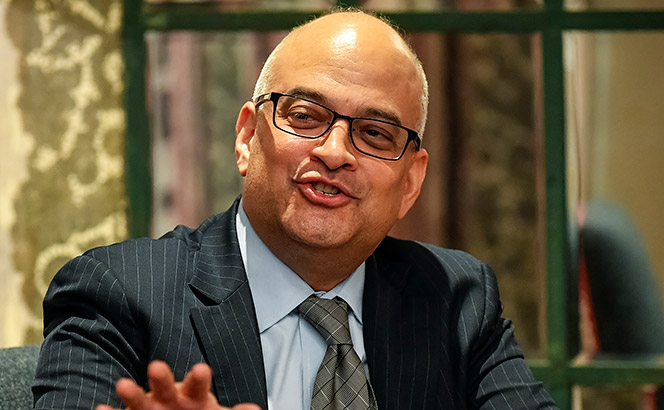

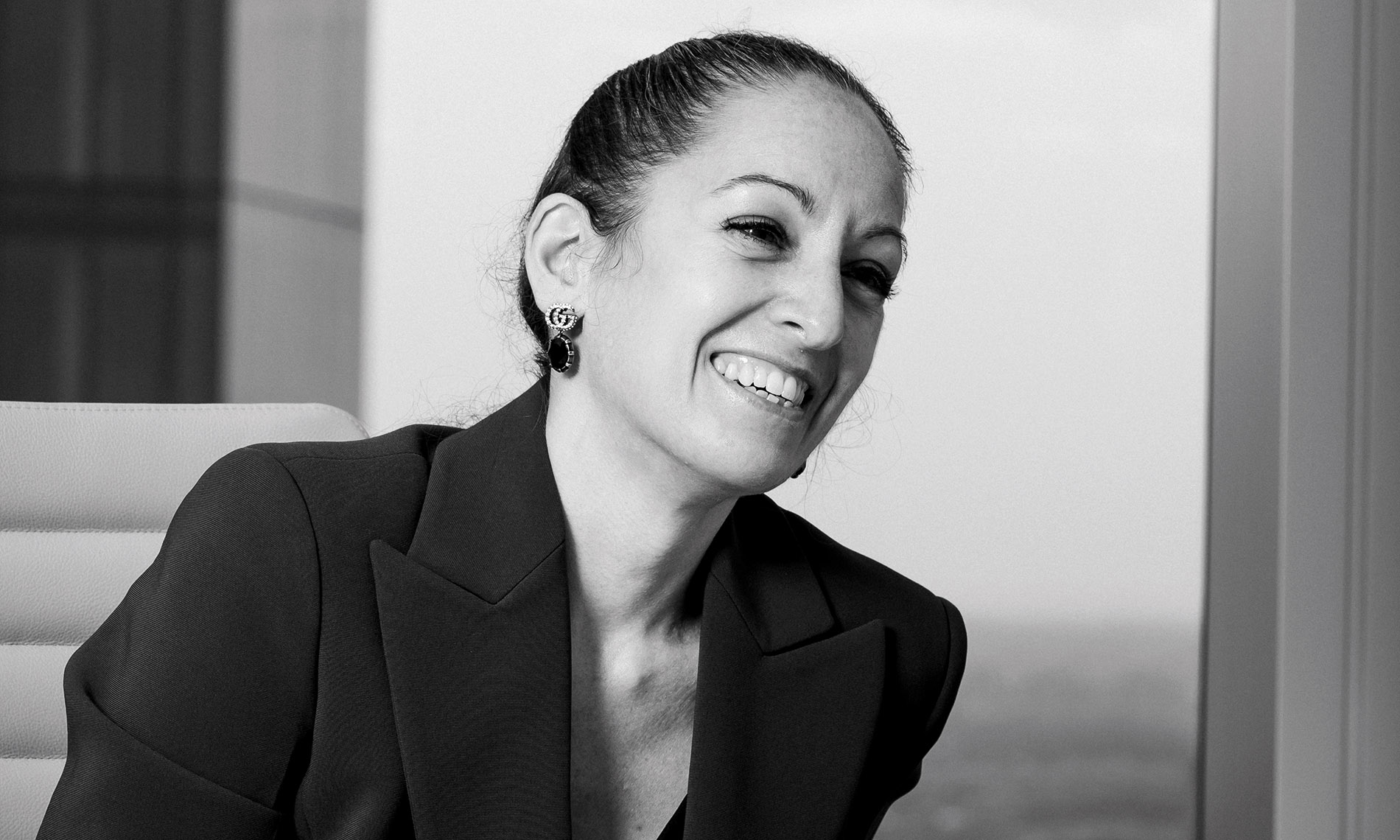
Life During Law: Diala Minott

My mum is Syrian and my father’s Iraqi. I was raised in Saudi Arabia and Lebanon. I was influenced by the war in Lebanon and then the war in Iraq. Constantly moving and never having a place that you can call your own, but also fighting to be educated.

As a girl in Saudi Arabia, I had to dress up as a boy to go swimming and horse riding. All the things women weren’t allowed to do. When I became a teenager, I wasn’t allowed to any more. It was very obvious that I was not a boy and I found my world cut in half. Continue reading “Life During Law: Diala Minott”

Sponsored briefing: Turkey: A paradise for startups and angel investors

New and bold ideas often come from young people. We see the effect the new generations have on innovative technologies, especially due to the increase in digitalisation and the adaptation of the older generation to digital life being slower than the younger generation. Startups are on the minds of most of the young business people who think that their creative ideas cannot grow within the huge bureaucratic and cumbersome holdings and joint stock companies.

The startup, in words of famous entrepreneur Neil Blumenthal, is a term used for companies working to solve a problem where the solution is not obvious and success is not guaranteed. Since a not-so-distant past, we have often heard this term and have seen entrepreneurs’ success and failure stories. The number of entrepreneurs who do not want to be a part of corporate culture, who have new and extraordinary ideas and who adopt a flexible working culture is rapidly increasing. When it comes to startups, success, investment, growth and earnings are on one side of the coin; whereas the other side holds the problems of the crawling period, financial difficulties and the difficulty of finding investment. Perhaps even those of you who are reading this article have or have had a successful or unfortunate startup adventure. Not everyone who touches, nurtures and feeds on the startup ecosystem is immune to the difficulties experienced in that painful birth and crawling process of a startup. Perhaps one of the most challenging of these difficulties is the problem of financing. While some entrepreneurs in Turkey benefit from sources such as KOSGEB or TÜBİTAK funds or micro-loans, some of them are knocking on venture capital companies’ and angel investors’ doors to solve the financing problem that can determine the fate of a startup. Apart from these, another source of financing frequently used is the savings that the entrepreneur has made up to that day or the financial support they received from family, relatives and friends. Continue reading “Sponsored briefing: Turkey: A paradise for startups and angel investors”

Sponsored briefing: Understanding SAFEs and complexities in the ‘Simple’

I. Understanding SAFEs

SAFE is an acronym for ‘Simple Agreement for Future Equity’ that is concluded between investors and the target startups; where the investors give the funds to startups in advance, in exchange for a promise from the company to give shares to the investor at a future date when the startup raises money on a priced round. It is possible for the startups to sign SAFEs with numerous investors at the same time with different terms, as by nature, SAFEs let startups reward investors who are willing to move first by taking more risk, with lower valuations. Continue reading “Sponsored briefing: Understanding SAFEs and complexities in the ‘Simple’”

Sponsored briefing: The metaverse law – are we ready for the challenge?

We are witnessing unexampled times… In the light of the pandemic, there have been economic ramifications in Turkey and all around the world. Yet, this was also an opportunity for finding tools in order to ensure business continuity, since no one had any idea on when the pandemic will cease. Thankfully, we are in an era where we can get the most out of technological developments. In that regard, virtual interactions have become an essential part of life for businesses. Needless to say, the legal sector is no different than any other sector. The trend has even accelerated during the pandemic, with both clients and law firms inclining towards video-conferencing and other appropriate forms of virtual interactions, eg, e-hearings and e-meetings.

Not long ago, interest in virtual interactions has focused on the ‘metaverse’, which seems to be the latest fashionable concept in tech viewed as a form of cyberspace. What makes the metaverse different? Well, basically, it allows us to immerse a version of ourselves as avatars in its environment via augmented reality or virtual reality. However, at this point, lawyers are inclined to ask who or what will govern the metaverse? Continue reading “Sponsored briefing: The metaverse law – are we ready for the challenge?”

Sponsored briefing: Legal developments in the retail and e-commerce sector in Turkey

The organised retail sector is one of the largest sectors in Turkey with an annual business volume of $80bn, 100,000 stores and a capacity of direct employment of 1.5 million people. These are the sales and service areas visited by most of the Turkish population to meet their daily needs and demands.

Especially retail e-commerce, among the trade transactions made on the internet, has achieved a significant growth rate with the potential it has in the world and in our country. Removing time and place restrictions from shopping and providing momentum in transaction increases the attraction of the customers day by day. Continue reading “Sponsored briefing: Legal developments in the retail and e-commerce sector in Turkey”

Sponsored briefing: Istanbul Arbitration Centre (Istac) and some key numbers

Today if you travel to east from Europe on board a plane, it is most likely that you will make a transit connection in Istanbul Airport, which is now a hub. As Istanbul is located in a unique geography and joins two continents, it is very likely that Istanbul will be similarly a hub in the field of law, with a particular focus on arbitration.

Backed by its modern international Arbitration Act, Turkey has also had a modern arbitration centre since 2015. Founded and launched in 2015, the Istanbul Arbitration Centre (ISTAC) has made great advances to turn Istanbul into a significant arbitration centre that unites East and West. Continue reading “Sponsored briefing: Istanbul Arbitration Centre (Istac) and some key numbers”

Sponsored briefing: Use requirement of trade marks and potential consequences of non-use under Turkish law

Under the Industrial Property Law numbered 6769 (IP Law), an important obligation imposed on trade mark owners after obtaining registration is the requirement to use the trade mark. The IP Law attaches two important potential consequences for non-use of the trade marks, after the completion of the five-year grace period. First, the trade mark can be revoked due to non-use upon the request of the interested parties and second, its enforceability can be weakened by a non-use defence asserted by the applicants in the opposition actions before the Turkish Patent and Trademark Office (the Office) or by the defendants in invalidation or infringement actions before the courts.

The non-use defence has been introduced as a revenue granted to applicants and defendants for the first time with the IP Law, with its entry into force in 2017. This expanded the potential consequences that could be faced by trade mark owners with vulnerable trade marks, by adding to the already existing risk of facing a non-use revocation claim under the late Decree Law numbered 556 on the Protection of Trademarks (Trademark Decree Law). Changes in practice will also take place as of 10 January 2024, with the transfer of the authority of the courts to evaluate non-use revocation claims to the Office. Thus, trade mark owners with trade marks registered for more than five years in Turkey should be cautious of the various avenues available to third parties against their trade marks, when deciding on enforcing their rights. Continue reading “Sponsored briefing: Use requirement of trade marks and potential consequences of non-use under Turkish law”

Sponsored briefing: Regulators grapple with the Turkish crypto market: From piecemeal approach to comprehensive regulation

The recent volatility of the Turkish Lira (TL) has increased the already high interest among Turkish investors in cryptocurrencies, with TL trading volumes in major coins showing exponential growth during the latter half of 2021. So far the regulators have been playing catch-up, with the first regulations in connection with crypto assets entering into force in the first half of 2021, just as the collapse of a large Turkish cryptocurrency exchange left hundreds of thousands of customers with no remedy and increased the appetite for more comprehensive regulation. Government officials have indicated they are in active talks with stakeholders to put together a draft law that will regulate cryptocurrency exchange platforms under licensing requirements and introduce protections for customers trading in cryptocurrencies (the ‘Draft Crypto Market Law’).

In this context, it would be advisable to understand the current regulatory landscape and the new regulatory framework that is currently in the works. Continue reading “Sponsored briefing: Regulators grapple with the Turkish crypto market: From piecemeal approach to comprehensive regulation”

Sponsored briefing: Formation of contracts by electronic means in Turkey

The rapid development of industrialisation and globalisation has resulted in the rise of the computer age. With the recent advancement in the areas of computer technology, telecommunications and information technology, living and business styles of people have been significantly changed.

Electronic commerce is one of the products of this change that has a major economic significance in today’s world. Electronic commerce provides the flexibility in terms of place and time. As a result, business relationships are not restricted with the limits of geography and time anymore. Continue reading “Sponsored briefing: Formation of contracts by electronic means in Turkey”

Sponsored briefing: Bells are ringing: Information exchange and obstruction of on-site inspections

Two main subjects have been in the Turkish Competition Authority (the Authority)’s spotlight in recent years. These two subjects are namely information exchange between competitors and fines for obstruction of on-site inspections.

Information exchange naturally has always been a matter of discussion in many Turkish Competition Board (the Board) decisions. What has changed over the years is the approach of the Board which has become gradually stricter and has reached a point of very little tolerance. The milestone decision regarding competitively sensitive information exchange is the Automotive1 decision in 2011 as it marks the first fine that was given mainly for information exchange. Following this, we have seen the Board imposing fines with a single document exchange containing information about future interest rates of competitors in the Banking2 decision in 2013. This change of approach has become more apparent in the Poultry II3 decision rendered in 2019, as the Board has stated that obtaining information regarding prices from third-party dealers was a breach of competition rules, if it has become a way of business and does not occur within the natural flow of commercial life such as dealers sharing the prices of competing suppliers as a means of price bargaining. This was contradictive of the Board’s Poultry I4 decision rendered in 2009 regarding the same market, as in that decision it was stated that obtaining competitively sensitive information from third parties was deemed acceptable in scope of competition rules. As a result of this shift of approach, doubts and uncertainties regarding obtaining information from third parties have arisen with this decision. Continue reading “Sponsored briefing: Bells are ringing: Information exchange and obstruction of on-site inspections”

Sponsored briefing: Utilising offshore structures for digital assets

Conyers’ Barnabas Finnigan and Eric Flaye on how offshore jurisdictions have positioned themselves to take advantage of recent developments

The development of blockchain applications and the rapid growth of cryptocurrencies and other virtual assets have opened up new opportunities in the fintech space in recent years. Increasingly, sophisticated investors are seeking ways to access this niche sector. Continue reading “Sponsored briefing: Utilising offshore structures for digital assets”

Sponsored briefing: Closer scrutiny for tech M&As

NAZALI’s Ayşe Ülkü Yalaz and Nilay Göker Duran on tech M&As in Turkey, the future of the practice and the new regulatory requirement which may affect ongoing and new transactions

Mergers and acquisitions in the technology sector has an increasing trend in Turkey similar with global trends. With a young and tech-savvy population, Turkey has great potential to be an important startup hotspot. With the excellent demographic dynamics, startups have the opportunity to face challenges locally and be expected when they are ready to market themselves internationally. Continue reading “Sponsored briefing: Closer scrutiny for tech M&As”

Sponsored briefing: What awaits companies that advertise on digital platforms?

Bilge Derinbay describes an effect of developments on technology to marketing activities in digital platforms under the sense of recently published regulations in Turkey

With the development of technology and the rapid growth of digitalisation in each sector, it is seen that companies are also sustaining their business to digital in order to increase their business capacity and customer group. At the same time, they carry on work and co-operate to easily adapt to digitalisation and changing conditions. An example of this is the emergence of NFTs, which have been trending lately – Nike, one of the important companies in sportswear, announced that it had purchased a company that is a creator of virtual sneakers and collectibles, merging realities in fashion and gaming. With this sale, it can be said that Nike has already taken its place in the metaverse ecosystem. Continue reading “Sponsored briefing: What awaits companies that advertise on digital platforms?”

Sponsored briefing: Do temporary uses longer than three months before the vulnerability date of a trade mark meet the requirement of a genuine use?

Simge Şahin, a partner of NSN Law Firm, reviews the final court order of Istanbul Anatolian 1st Intellectual Property Court regarding the non-use cancellation of a registered trade mark that was being used for a temporary period in Turkey

Article 9 of the Turkish Intellectual Property Code (the IP Code) regulates that a trade mark shall be revoked if it has not been put into genuine use in Turkey by the trade mark holder for the goods or services within the registration scope within a period of five years following the date of registration (or where such use has been suspended for an uninterrupted period of five years), unless there are proper reasons for its non-use. Continue reading “Sponsored briefing: Do temporary uses longer than three months before the vulnerability date of a trade mark meet the requirement of a genuine use?”

Sponsored briefing: Q&A: Caner Durgut, Isıkal Law Office

Given Turkey’s recent economic problems including the currency crash and inflation together with continued problems created by the Covid-19 pandemic, how is this affecting your firm?

As is obvious, the world can be faced at any time with unexpected situations such as a pandemic, economic crisis, economic war, and even an actual war. The effects of those situations are worldwide since communications, trade, the economy itself, and every other thing today has become global. On the other hand, it is undeniable that we, as human beings, must move forward in order to save our world and in so doing save our own lives. This rightfully may be called our main purpose. Continue reading “Sponsored briefing: Q&A: Caner Durgut, Isıkal Law Office”