Four firms take slice of the action as Kingsmill owner buys Hovis for £75m

A quartet of law firms have advised on the £75m acquisition of Hovis by Associated British Foods (ABF), a deal which is set to combine two of the UK’s biggest bread brands.

A&O Shearman advised Kingsmill owner ABF on the transaction, will see the FTSE 100 company acquire sliced bread competitor Hovis from private equity firm Endless, which has owned the brand since 2020.

In a statement, ABF said that the combination of Hovis with its UK bakery business, Allied Bakeries, would drive ‘significant costs synergies and efficiencies’ and create ‘a profitable UK bread business’, adding that the deal had been prompted by a decline in demand for sliced packaged bread in recent years.

Consumer and retail sector lead Annabelle Croker led the A&O Shearman team advising ABF, supported by corporate and M&A senior associates Anthony Bowen and Laura Milward-Lynch and associates Toluwa Agboola and Charles Ng, while Macfarlanes handled regulatory and antitrust aspects of the deal, led by competition partner Cameron Firth.

Meanwhile, Walker Morris advised Endless, led by corporate partner Debbie Jackson and competition partner Sarah Ward with support from associates Matt Gale and Joel Davies. The Leeds firm is a regular adviser to Endless, and recently worked with the private equity firm – which is also based in Leeds – on its exit from business supplies distributor evo earlier this year.

Freshfields handled competition aspects of the Hovis deal for Endless, with Alastair Chapman, the firm’s global head of antitrust, competition and trade leading the firm’s team.

A&O Shearman has previously advised ABF on a number of acquisitions, including balsamic vinegar producer Acetum in 2017, US natural food producer Anthony’s Goods in 2019 and nutrients developer Fytexia Group in 2022. However, in 2023 the company instead turned to Addleshaw Goddard for advice on its acquisition of dairy tech firm National Milk Records.

On its 2020 acquisition of Hovis, Endless was advised by US firm Dechert, while Hovis was represented by Travers Smith.

[email protected]

New research shows in-house legal tech adoption surging as Gen AI gains ground

A survey of more than 150 GCs has highlighted the extent to which technology is transforming in-house legal teams.

GC Pulse 2025, which was conducted by Legal Business in association with Thomson Reuters, has revealed that 44% of corporate legal departments are now using legal technology frequently or all the time — a sharp rise from 34% in 2024.

The survey found much of this growth in usage is being driven by generative AI, with legal teams integrating it into their daily workflows faster than ever before.

Crucially, while GCs remain under growing pressure to lead their teams and oversee matter management,  as well as regulatory risk and compliance, all while sticking to tight budgets, heightened awareness of AI means broader corporate support for tech investment for the legal team is also growing.

Nearly one-third (32%) of the GCs surveyed said they now found it easy or very easy to secure approval for technology purchases. Eighty percent of respondents expect to devote as much as 20% of their legal budgets to technology this year, up from 68% in 2024, with AI expected to drive much of this increase.

Max Freeman-Inglis, head of legal operations at Alliance Pharma, said securing budget for the legal function rarely posed a serious challenge, with the team already able to demonstrate metrics to measure the success of some implementations.

He added: ‘Our C-suite are huge on AI – they love it, see the benefits, and there’s a real push to use it. We started with the pure data piece: uploading contracts and getting the data sorted. Now, we’ve got a fully automated system for non-disclosure agreements (NDAs). What used to take two to three weeks now takes two to three hours. That’s an easy metric to show the board.’

The survey also found that perception of AI as a reliable legal resource has nearly doubled within the GC community, with 40% of respondents now expressing trust in the technology, compared to 21% last year. Only 3% of legal professionals maintain that AI is not yet dependable; down sharply from 11% in 2024.

Despite this increased faith, implementation of AI remains more measured. Although the survey found that 86% of GCs plan to maintain or increase AI-related spending, only 11% have fully integrated generative AI tools into their operations. When asked where they saw the biggest use case opportunities for AI to enhance their work, GCs pinpointed automation, due diligence and contract lifecycle management (CLM) as areas for growth.

Alex Graydon, associate general counsel at Thomson Reuters, said: ‘Over the last two years, Gen AI has been the buzzword everyone’s talking about. But automation is still very much alive. We’ve had a document automation product since around 2015, which allowed us to automate and release self-serve NDAs to the business, and we’ve expanded that automation model.

‘For example, our legal front door, built on HighQ, is a landing place for the business to request legal support. We use it for work intake: asking a series of questions, collecting answers, allocating lawyers, managing workflows, and reporting data. But we can now layer on AI to this to extract insights and value. For those just starting their tech transformation journey, it’s worth remembering automation and combining these tools with Gen AI can be powerful, but automation of workflows and document creation remains extremely valuable for many businesses.’

Looking ahead, the survey points to agentic AI – autonomous systems capable of handling complex, multi-step legal processes – as the next frontier.

Commenting on the how AI is transforming the profession, Alessandro Galtieri, deputy GC at Colt Technology Services, draws a parallel with a previous tech revolution as he concludes: ‘Five years from now, a lawyer who doesn’t use AI will be like a lawyer today who doesn’t use email.’

————————————————————————————

The GC Legal Tech Pulse 2025 report, produced by Legal Business in association with Thomson Reuters, offers a comprehensive look at how in-house legal teams are embracing technological change, drawing on a survey of over 150 general counsel and senior lawyers. Access the full GC Pulse report here and click here to watch a webinar discussion of the report’s findings.

Slaughters, Latham and HSFK lead on National Grid’s £1.5bn LNG sale

Slaughter and May, Latham & Watkins and Herbert Smith Freehills Kramer have all taken lead roles on Centrica’s £1.5bn acquisition of one of the UK’s largest liquefied natural gas terminals from National Grid.

Centrica is acquiring the Isle of Grain terminal in Kent alongside Energy Capital Partners (ECP), which is part of Bridgepoint Group, via a 50/50 joint venture.

Slaughters is advising Centrica on the deal, with a team including corporate partners Robert Innes and Natalie Cook, energy and infrastructure partners Oliver Moir and tax partner Sarah Osprey, with partners Philippa O’Malley and Duncan Blaikie handling pensions and intellectual property respectively.

After taking into account approximately £1.1bn of project finance debt, Centrica’s 50% share of the total equity investment will be valued at approximately £200m.

Latham is advising ECP on the acquisition, with London corporate partners David Walker and Beatrice Lo leading alongside finance partners JP Sweny and Alexander Buckeridge-Hocking.

The US firm also advised on the project’s debt financing, which totals around £1.5bn, and ECP on its shareholder arrangements with Centrica.

HSFK is advising National Grid, with the firm’s team being led by corporate partners Charles Steward, Caroline Rae and Reza Dadbakhsh. The role comes after HSFK last year acted for National Grid on its £630m divestment of its electricity system operator to the UK Government

The Isle of Grain terminal is located off the Thames estuary and can process 15 million tonnes of liquefied natural gas each year, which equates to about a fifth of the UK’s demand for gas.

The deal is expected to close before the end of 2025, subject to regulatory approval.

The sale comes on the back of another major energy infrastructure development last month, with funding finalised for the Sizewell C nuclear plant. That £38bn deal has seen the UK Government take a 45% equity stake, with the remainder split between Centrica (15%), EDF (12.5%), Amber Infrastructure (7.6%) and Canadian investors La Caisse (20%).

Slaughters and HSFK also acted on that deal, advising Centrica and La Caisse respectively, with other firms including DLA Piper, Freshfields and Linklaters taking key roles.

[email protected]

South Asian Heritage Month: ‘My experiences have shaped me – that adds value in terms of what I bring to the firm’

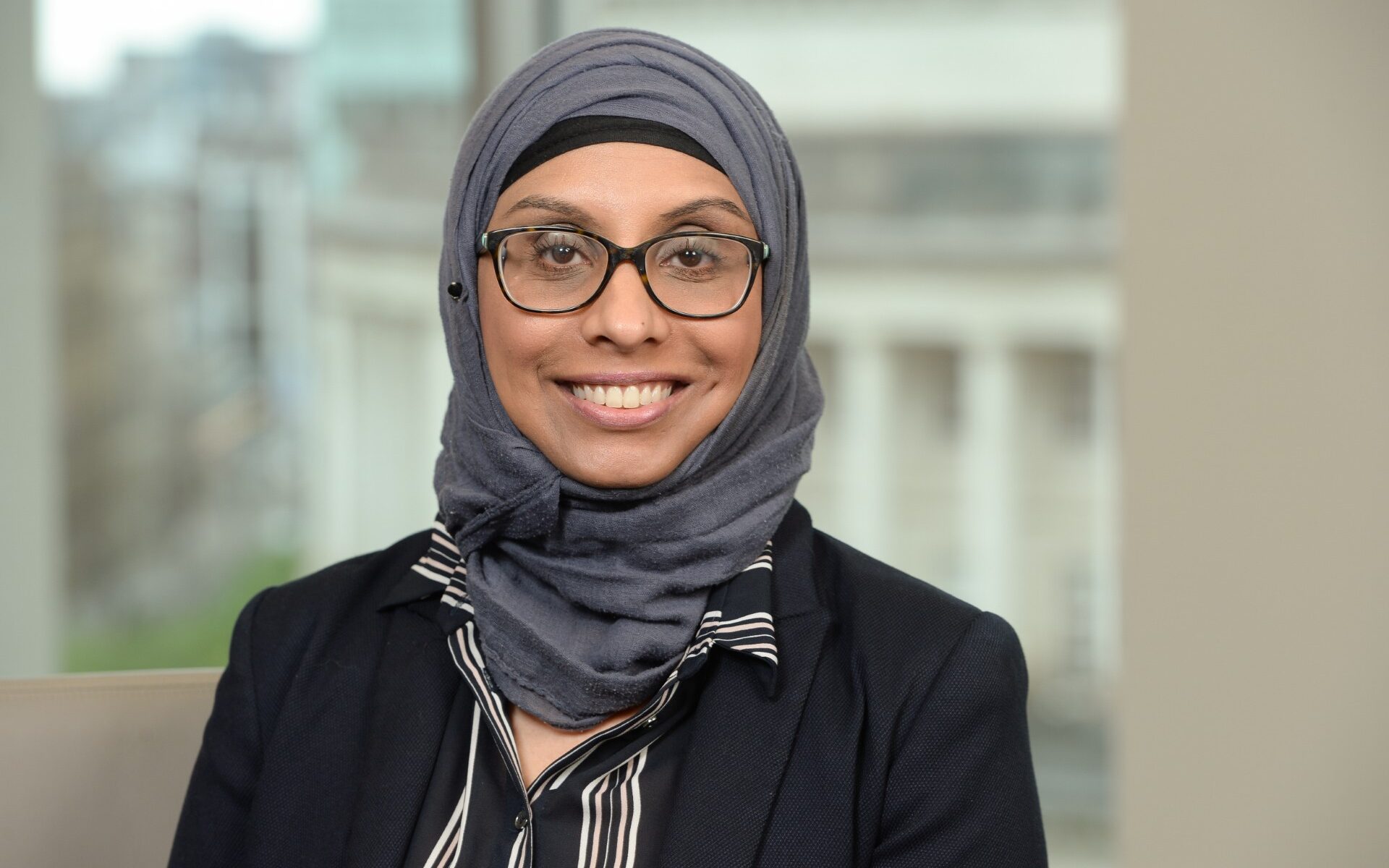
Twenty years ago, Sajida Hussain approached the reception desk of an assessment centre and said she was there for an interview. Despite wearing a suit, Hussain was asked if she was in the right place. ‘To me it felt like they saw what I looked like,’ she says, referring to her ethnicity and hijab, ‘and it felt like, from their perspective, I didn’t deserve to be there.’

As a young university student, Hussain already felt out of place, and though she knows the comment was likely not malicious, it amplified what she was already thinking. ‘It doesn’t put you in good stead for your interview when you’re trying to make a good impression,’ she explains.

Hussain emphasises that people have largely been incredibly receptive to her identity, but this brief encounter is something Hussain still shares as a learning experience decades later. It wasn’t until the last few years that Hussain, now a legal director at Addleshaw Goddard, began to reflect on the lack of South Asian representation within the sector.

During the last four weeks of South Asian Heritage Month, which began in 2020, the same year that Hussain joined Addleshaws, Hussain has seen her colleagues enjoy Bhangra dancing, traditional henna art and South Asian cuisine; things her younger self could have scarcely believed possible in a corporate law firm.

A mock trial during her school years got Hussain interested in the law, before Ally McBeal crystallised her ambitious goal of making it to a global firm. ‘I’ve never been scared of a challenge and, for me, getting into an international firm was a challenge,’ she says.

However, being the first person in her family to go to law school meant she struggled with training contract applications. A senior individual in a prominent law firm began mentoring Hussain, which eventually helped her land a training contract at DAC Beachcroft. Now, as the co-chair of AG Embrace Manchester (Addleshaws’ ethnicity network) Hussain is eager to pay forward the goodwill she received and do what she can to increase visibility and representation of Muslim and South Asian lawyers.

Hussain adopted the co-chair role at Embrace because it was ‘the right thing to do’, but initially remained hesitant to share her personal experiences, not wanting to be judged or pitied. It wasn’t until a couple of years ago, during Addleshaws’ reverse mentoring scheme, where colleagues from underrepresented backgrounds speak to partners and board members about their life experiences and journey’s into law, that she began to open up. ‘Sometimes I wish I would have been a little braver in terms of telling my story; people want to learn about your background, ethnicity, heritage and what a person’s individual experiences are,’ she says.

Hussain soon realised that lots of people could benefit from hearing her story: ‘If I went through these experiences, then it’s possible that others have too. There are a lot of people out there who still don’t feel like they can bring their true identity to work, but there’s no reason why they should feel like that; I’m trying to lead by example.’

Mentorship can take many forms depending on what someone needs. ‘Sometimes you need a coach, sometimes you need a sounding board, sometimes you simply need someone to vent to when facing challenging events. For example, I walked into a room where I was the only ethnically diverse person and someone gave me a weird look. Unless you have been in that situation, it is hard for you to understand what a “weird look” means or feels like. It’s just frustrating that such things still sometimes happen but thankfully it’s less than 10 or 20 years ago. Luckily,’ Hussain says, ‘I’ve got an amazing support network of allies.’

With a visible presence on LinkedIn, Hussain is now returning the favour. She regularly receives messages from juniors about issues she struggled with, such as whether to wear a hijab, how to tell colleagues you’re fasting, or whether to attend networking drinks with alcohol. ‘There’s part of me which feels this is really good and [I’m] making a difference,’ she reflects, ‘but there’s also part of me which feels sad because sometimes I come across people still grappling with the same challenges I went through 20 years ago – it tugs at your heartstrings.’

There is no right way to answer such questions, Hussain emphasises. ‘The starting point is that everyone is an individual,’ she says, and this is, she believes, the key value of building an inclusive culture from the ground up: ‘My experiences have shaped me to be who I am and that has added value in terms of what I bring to the firm, the practice and my expertise, because I think about things differently. I think that’s largely because of all the blockers that I’ve had to go through, that I’ve had to start thinking laterally. And I do think that’s an added value advantage that not many people can offer.’

A key part of creating a varied culture begins with recruitment, Hussain says, as she highlights that Addleshaws has been challenging recruiters to put forward the best candidates, regardless of their background. ‘People who come with different learned experiences can be more creative and offer different perspectives and solutions.’

But visual representation is a two-way street, and it is crucial that there is more representation on the side of the people conducting the interviews. ‘I know this can be a key factor when someone is trying to pick which firm to work for,’ Hussain says.

Despite the current pushback against DEI from some quarters, Addleshaws is standing firm, according to Hussain. ‘Addleshaws always has a strong and powerful message when it comes to DEI, regardless of what is happening in the world,’ she says. ‘It is important to focus on the things that firms and individuals can control and it’s about doing the little things that make a difference to future generations,’ Hussain adds.

When organising work social events, Hussain says Addleshaws casts the net wide in terms of accommodating a variety of needs, considering factors such as dietary requirements, alternatives to alcohol and timings that suit colleagues with childcare responsibilities.

‘My vision for the next 10 or 20 years is to get to a place where everyone is comfortable in being their true authentic self, regardless of whether you’re neurodiverse, ethnically diverse or what your religious beliefs are. The key is getting buy-in and getting investment from senior leadership, including at board level – there’s only so much you can do at the junior end without senior support behind you. At Addleshaws, our strategy starts with the board and filters down.’

[email protected]

Proskauer lands White & Case lev fin partner as City finance hiring spree continues

US firm Proskauer has continued its City finance build-out with the hire of White & Case leveraged finance partner Peter Mason.

The hire marks the latest phase in Proskauer’s strategy to grow its private credit capabilities in the capital, and comes on the back of a flurry of hires last year, including Philip Bowden, the former co-head of banking at Allen & Overy.

Mason, who is joining Proskauer’s global finance practice in London, started his career at Freshfields before joining White & Case as a partner in autumn 2023.

A leveraged finance specialist, he advises on complex cross-border transactions in both Europe and the US, alongside real estate deals and restructurings. Recent matters he was involved in at White & Case included advising creditors on the financing for the £350m acquisition of Alliance Pharma.

Bowden – who now co-heads Proskauer’s global finance practice alongside Justin Breen and Andrew Bettwy in New York – said that the practice was expanding ‘in response to increasing client demand,’ and that the firm was looking to grow its platform to ‘deliver a full suite of leveraged finance solutions’ around the world.

Mason’s hire is the latest in Proskauer’s expansion of its global finance team, with the firm adding a total of eight partners to the practice over the last year.

The buildout began in earnest in July 2024, when the firm sealed the hires of A&O Shearman duo Bowden and Megan Lawrence, followed not long afterwards by three additions from Cahill Gordon & Reindel’s London office – Jake Keaveny, who is now head of European capital markets, Warren Newton and Court Tisdale.

The recruitment continued throughout late 2024 and early 2025, with structured finance specialist and former A&O Shearman and Milbank partner John Goldfinch joining in November, and credit-focused restructuring expert Clare Cottle moving over from Akin in March this year.

More recently, financial services regulatory partner Anna Maleva-Otto joined from Schulte Roth & Zabel ahead of her former firm’s merger with McDermott Will & Emery.

Proskauer now has around 180 lawyers in London, according to its website, including 55 partners.

Eversheds Sutherland pushes PEP to £1.4m as revenue sees another year of growth

Eversheds Sutherland London office

Eversheds Sutherland has posted across-the-board increases for the 2024-25 financial year, with profit per equity partner (PEP) closing in on the £1.5m mark.

The results, which encompass the firm’s business outside of the US, include a 3% revenue increase to £768.7m, while PEP saw the steepest hike, rising 8% to £1.4m, with net profit up 6% to £185.7m.

Eversheds Sutherland (International) contributes around two thirds of the total turnover for the firm as a whole, which took in revenues of $1.63bn (£1.2bn) for the 2024 calendar year. The firm operates as a verein, combining legacy firm Eversheds and Sutherland Asbill & Brennan following their 2017 transatlantic union.

The 2024-25 results signal an improvement from the year prior, when PEP grew by less than 1% and revenue inched up by 2.5.%.

Keith Froud, who took over as chief executive of the international business from Lee Ranson this May, said in a statement: ‘These results build on our excellent track record, with year-on-year revenue and profit growth for the past eight years.’

‘The firm’s global strategy has served us very well. I was very clear with the partners when I was elected that my focus will be to accelerate that to the next stage.’

Froud is a firm lifer, starting his career at legacy Eversheds in 1993, serving as international head of company and commercial from 2011 to 2017 before becoming international managing partner when Ranson became chief executive in 2017, shortly after the US merger went live.

Key matters handled by the firm during the past financial year included advising Annington Property on the £6bn sale of an estate to the Ministry of Defence, one of the largest property transactions in UK history.

This year the firm made up 23 lawyers to its partnership, 52% of who are women.

Pinsent Masons also today (13 August) posted its 2024-25 financials, with revenue climbing 4.7% to £680m, while PEP edged up by 0.5% to £797,000.

[email protected]

Trading places: Leading litigator leaps to Latham as Simpson Thacher bulks up in Boston

Simpson Thacher has continued to build out its Boston office, adding M&A partner William Lay from Kirkland & Ellis. Lay spent seven years at Kirkland advising on M&A and private equity transactions, including nearly two years as a partner.

His hire comes after the firm opened in Boston in May 2024, adding more than six lateral partners in the months since launch, as increasing numbers of international firms move to build their presence in the city.

Simpson Thacher’s M&A head Eric Swedenburg said:  ‘His addition reflects the continued momentum of growth in our Boston office and our broader strategy to continue expanding Simpson Thacher’s transactional capabilities in key markets.’

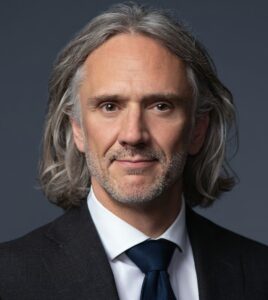
Over in New York, Latham & Watkins has hired acclaimed trial litigator David Marriott (pictured). A Legal 500-ranked leading trial lawyer, Marriott joins from Cravath, where he spent nearly three decades, making partner in 2003.

Latham chair and managing partner Rich Trobman said in a statement: ‘The addition of Dave, a formidable talent and leading trial lawyer known for winning the hardest cases, makes perfect sense as we focus on delivering sophisticated legal advice that enables our clients to see around corners, beat down challenges to achieving their business goals, and further hone their competitive position.’

Marriott joins as a partner in both the litigation and trial department and the antitrust and competition practice. His arrival marks the sixth antitrust partner the firm has brought on globally since February.

The five earlier hires were: Alfonso Lamadrid, who joined in Brussels from Garrigues in May; Tilman Kuhn, who joined in Düsseldorf from White & Case in April;  former deputy assistant attorney general Andrew Forman in Washington DC in June; David Brenneman from Morgan Lewis in Washington DC in May; and Meaghan Thomas-Kennedy, who returned to the firm’s San Francisco office in February from Apple, where she worked in the antitrust litigation division as senior legal counsel from 2022 to September 2024 and then as principal counsel.

Elsewhere in Manhattan, Simpson Thacher has hired tax partner Ari Zak from Dechert. Zak joins after 13 years at Dechert, where he made partner in 2015, and brings particular expertise advising on issues relating to the taxation of investment funds and their investors.

New York UHNW-focused firm Sterlington has hired a private wealth team from Morgan Lewis, led by partners Emalee Welsh, Daniel Carmody, and Daniel Cooper, who joins Sterlington as private wealth team head.

Meanwhile, Broadfield (formerly BDB Pitmans) has announced the launch of its first office in the US, appointing five partners in New York as co-founding partners of Broadfield US LLP.

The hires include employment litigation and regulatory compliance partner Michael Volpe from Venable, and M&A, venture capital, and strategic investments partner Christopher Hagenbuch from Dentons, as well as M&A partners Michael O’Brien and Adele Hogan from financial services-focused New York firm Otterbourg. Also making joining is Trevor Bradley, a litigator who was an attorney at Connecticut-headquartered US national firm Robinson+Cole.

The new office is the firm’s second international opening outside the UK, following a February launch in Hong Kong that saw it bring over Sidley APAC investment funds group head and executive committee member Effie Vasilopoulos as Asia Pacific lead and Broadfield Asia managing partner.

The firm followed up with a clutch of hires in July, bulking out the office with restructuring and insolvency partner Gordon Davidson, also from Sidley, and Kirkland & Ellis Asia arbitration head and litigation co-head Fergus Saurin.

Finally in New York, McGuireWoods hired M&A senior associate Bharath Mohan from Paul Weiss as a partner.

Over on the West Coast, Arnold & Porter has opened in Seattle, launching its new office in the city with a slate of hires from K&L Gates.

The new office will be led by litigator Pallavi Mehta Wahi, who joins as chair of Western US strategic growth, having previously spent 19 years at K&L Gates, including as Seattle office managing partner since 2015.

Joining her in Seattle are corporate, healthcare, and technology partner Annettee Becker and employment partner and class action litigator Patrick Madden.

The firm has also announced a further raft of hires from K&L Gates in Seattle, bringing over real estate partners Marisa Bocci and Kari Larson, labour and employment partners Mark Filipini, Ryan Groshong, and Todd Nunn, and litigators Ashley Gammell and Aaron Millstein.

The move brings Arnold & Porter’s total office count to 16. Of these, 11 are located in the US, with four on the West Coast – Los Angeles, San Francisco, Silicon Valley, as well as the new Seattle office.

Also making the move to Arnold & Porter from K&L Gates are Rosemary Alito, a labour and employment partner who will be based in the firm’s Newark office, and litigation partner Daniel Glassman, who joins in Los Angeles.

Finally, Womble Bond Dickinson has significantly expanded the Nashville office it launched in 2022, bringing in a 20-lawyer litigation team from local  firm Neal & Harwell.

The team includes 15 partners: Ben Aaron, Tom Dundon, Phil Elbert, Ron Harris, Callie Hinson, Jim Kelley, Bill Ramsey, Isaac Sanders, Jim Sanders, Nathan Sanders, Mariam Stockton, Jim Thomas, David Thompson, Liz Tipping, and Jeffrey Zager.

Eighteen of the 20 lawyers will join Womble’s business litigation group, with the remaining two joining its finance, bankruptcy and restructuring practice.

The hires make up the bulk of the attorneys at Neal & Harwell, which is set to close on 31 August after co-founding partner Aubrey Harwell left to join New Orelans-founded national firm Adams & Reese in May.

[email protected]

DLA and DWF crack $50m sale of Fabergé eggs maker

DWF and DLA Piper have advised on the sale of renowned jeweller Fabergé to a US tech investment firm for $50m.

DWF advised the seller – Gemfields, a British mining and gemstones company – on the transaction, with a team led by corporate partner James Wilson, supported by corporate director Jemil Visram and tax partner Tom Rank.

Wilson, who joined DWF in October 2022, was also part of the Reed Smith team that advised Gemfields on its $142m acquisition of Fabergé.

On the buyer’s side, DLA advised SMG Capital, which is owned by tech entrepreneur and venture capitalist Sergei Mosunov. The firm’s team was led by corporate partner Alexander Kolmakov, with tax partner Matt Davies and legal director Gemma Grunewald providing additional support.

Fabergé is best known for its diamond-encrusted jewelled eggs, famously crafted for the Russian Romanov royal family.

Gemfields, which is listed on both AIM and the Johannesburg Stock Exchange, owns some of the largest precious stones mines in the world, including the Montepuez Ruby Mining operation in Mozambique and the Kagem emerald mine in Zambia.

The transaction began in November last year, but paused while Gemfields carried out a rights issue in June which raised $30m. Under the terms of the deal, $45m was paid to Gemfields on completion of the sale, with the remaining $5m to be paid through quarterly royalty payments of Fabergé’s revenue at an 8% rate.

Gemfields are ‘concentrating on their core business and streamlining their operations to focus on the mining side of the business,’ said DWF deal team leader Wilson, who added that alongside the recent successful rights issue, Gemfields had significantly strengthened its balance sheet.

Pinsents posts modest revenue increase as PEP stalls

Pinsent Masons grew revenue by just under 5% during the last financial year, with the increase in fee income coming against a second year of broadly static profits per equity partner.

Revenue climbed 4.7% year-on-year to £680m, up from last year’s figure of £649.6m, with the rate of growth slightly down on last year, when turnover climbed 7%.

PEP, meanwhile, edged up 0.5% to £797,000, with managing partner Laura Cameron attributing the flat results to an increase in equity partner numbers. The firm’s total partner count stood at 502 for the last financial year, including 212 full equity partners. This compares with 187 equity partners in the 2024 LB 100.

Last year Pinsents reported a marginal decline in PEP of less than 1% to £793,000, with PEP now back to where it stood in 2023.

Cameron (pictured) told Legal Business she was pleased with a ‘really strong year’ against a backdrop of geopolitical uncertainty and continuing economic headwinds. But the managing believes market conditions will improve:  ‘I’m actually really positive about the future, positive about this coming year. I think there are lots of opportunities. We are seeing interest rate cuts so I’m very positive and I know fellow managing partners feel the same.’

She highlighted infrastructure, real estate and financial services as standout performers across the year, with each hiking revenue by double digits. Key client wins during the year included an appointment as sole legal provider for Heineken in the UK and advising longstanding client MFG on its £2.5bn acquisition of more than 700 Morrisons petrol and EV development sites.

Pinsents’ growth over the 2024-25 financial year included adding 13 lateral hires, as well as making up 24 new partners internally.

It also opened a new office in Riyadh  on 1 March, shortly after announcing plans to open a new office in Shenzhen in China. The Shenzhen base, which will be the firm’s third in mainland China in addition to one in Hong Kong, is scheduled to open later in 2025.

Cameron said multijurisdictional work made up almost 20% of the firm’s revenue during the last financial year, with this percentage expected to increase over time.

Beyond traditional legal work, Pinsents started working with V7 GO, a tailored AI programme that improves workflow for clients, which has already yielded efficiencies, according to the firm.

The firm has also hired its first director of transformation, Neil Green, and a new chief technology officer, Tracy McDermott, to oversee innovation and tech developments.

‘We are an innovative law firm,’ said Cameron. ‘We’ve always been at the front end of that space, and we want to continue to be there, developing our technology and also actually developing and investing in our people.’

News of Pinsents’ financial performance comes after insurance leader Clyde & Co saw revenue climb 3% to £854m, with net profit increasing by just under 2% to £177.5m.

The results, which represent a 27th consecutive year of growth for the firm, saw North America as the firm’s fastest growing region by revenue, now accounting for 25% of fee income. The UK accounts for 46% of revenue, the Middle East and Africa 11%, APAC 9%, Europe 7% and Latin America 2%.

The firm’s expansion strategy saw a merger with Dallas-based firm Tillman Bachelor, a partnership with G Herrera Abogados & Asociados in Columbia and the addition of 59 new partners, 35 of which were promoted internally.

Elsewhere, Fieldfisher has reported a year of strategic expansion and modest growth. Total firmwide revenue (including verein offices) rose by 1% to £385m, while integrated firm revenue grew by 10% to £364m. PEP climbed by 3% year-on-year to £1m.

The firm reported revenue growth in all departments and across the firm’s European network, with double-digit increases in newly opened offices in Austria and Italy, as well as in Germany, Spain and the Netherlands.

Managing partner Robert Shooter, who was re-elected for a further three-year term from April 2025, commented: ‘This has been a period of strategic transformation and investment in our firm. We have expanded our European presence, adding new offices in Austria, Italy, Poland and Portugal to our network in the last two years. We have also made significant investments in our premises in Hamburg, Berlin and Dublin, with the Birmingham office move and the refurbishment of our London headquarters taking place later this year. Against this backdrop, we have achieved growth across all offices and practice areas.’

Clifford Chance and Latham lead on Metlen’s £6bn London listing

Clifford Chance and Latham have picked up key roles on the largest listing of a European company in the UK since 2017.

CC has advised Greek energy and metals company Metlen Energy & Metals on its £6bn London Stock Exchange debut, which is the largest primary listing in London so far this year.

The company, which operates in over 40 countries, redomiciled to the UK, with the transaction including a primary placement on the LSE and a secondary listing on the Athens Stock Exchange.

CC’s team was led by London capital markets head Simon Thomas, supported by a team including senior associate James Koessler and associates Radhika Sharma and Inês Teixeira.

Other CC partners involved in the deal include employment partner Amy Bird, restructuring partner Timothy Lees, tax partner Nicola Hemsley and litigators Michael Lyons and George Kleinfeld.

Latham picked up the international legal adviser role for the joint UK financial advisers and sponsors, Morgan Stanley and Citigroup Global Markets. The US firm fielded a team led by  London corporate partners James Inness and Anna Ngo, and counsel Koushik Prasad.

Metlen expects to be admitted to the FTSE 100 as early as September 2025, with its market capitalisation currently standing at around €6.7bn (£6bn ). If this happens, it will become the first company in over a year to directly enter the index through a primary listing.

Metlen’s shares will continue to be denominated in euros, making it one of the first companies to use new rules that allow non-sterling shares to be included in the FTSE UK indices.

Commenting on the transaction, CC’s Thomas said:  ‘This is a hugely important transaction for the London market, being the largest listing of a European business in London since 2017. In addition, Metlen will become the first company to enter FTSE’s UK indices with shares denominated in Euros, signalling the continued attractiveness of the UK for global companies to list.’

Late last month Legal Business reported that ECM partners were backing London for an IPO rebound, despite activity levels falling to a 30-year low over the first half of this year.

Industrial giant Metlen’s market cap more than tripled between 2021 and 2024 and it is Greece’s largest home-growth company.The transaction  also generated roles for a number of Greek firms, with Bernitsas Law acting for Metlen, Karatzas & Partners acting for the UK sponsors and Papanikolopoulou & Partners advising the Greek financial advisers.

Kirkland, Simpson Thacher lead as Claire’s files for second bankruptcy in seven years

Kirkland & Ellis and Simpson Thacher & Bartlett are advising as fashion accessories retailer Claire’s filed for bankruptcy in the US for the second time in seven years.

According to the Chapter 11 petition filed in Delaware, Claire’s has estimated liabilities of between $1bn and $10bn. The retailer previously filed for bankruptcy protection in early 2018, emerging later that year following a restructuring advised on by Weil Gotshal & Manges.

Claire’s operates approximately 2,750 stores across North America and Europe, according to its website, with around 280 of those in the UK.

Legal Business understands that the multi-office Kirkland & Ellis team advising Claire’s includes US restructuring partners Joshua Sussberg, Alexandra Schwarzman and Allyson Smith, alongside London-based restructuring partners Hannah Crawford, Kon Asimacopoulos and Mallika Abidi.

Kirkland litigation partners Joshua Greenblatt, Michael Sciaccotta, Melanie MacKay and Jeffrey Goldfine are also listed on the Delaware court docket for the proceedings.

Simpson Thacher, meanwhile, is advising JPMorgan Chase Bank as administrative agent for the asset-based lenders to Claire’s, with a team including New York restructuring partner Elisha Graff and Houston banking and credit partners Brandan Still and Bryce Kaufman.

Claire’s is being advised on Canadian law by domestic firm Osler Hoskin & Harcourt, with Alvarez & Marsal engaged as restructuring advisor.

The filing comes at a challenging time for the retail sector. Discount chain Poundland was recently sold to private equity firm Gordon Brothers for a nominal sum widely reported to be around £1, while high street fashion retailer River Island has proposed a restructuring plan that would see it shutter underperforming stores.

In a statement, Claire’s CEO Chris Cramer said the decision was ‘difficult, but a necessary one,’ adding that the bankruptcy had been driven by factors such as ‘increased competition, consumer spending trends and the ongoing shift away from brick-and-mortar retail’, as well as the company’s debt obligations.

[email protected]

The Client Profile: Arm legal chief Spencer Collins on humble starts and career successes

I had a humble start in life – and the hunger I developed from that gave me an edge. After a few years working on the business side at some technology companies, I decided I wanted to be a lawyer – mainly because I enjoyed negotiating and running projects. I decided to study law on a part-time evening basis whilst holding down a full-time job at a multinational technology company. I threw everything at it – leaving the house at 7am to go to work and getting home around midnight after university most days.  

The first key milestone occurred during my second year at university. I landed a two week diversity work placement at Allen & Overy (now A&O Shearman). I was treated very well by A&O and it gave me insight into a world that was very different than the world I was from – and I wanted more.

On my first day, I attended an evening function and was told ‘off the record’ by a partner that the placement ‘will not lead to a job or anything, but just enjoy the experience’. I wasn’t having any of it. I left the function early to go home to apply for a training contract at the firm!

My hard work paid off – I ultimately managed to land the training contract and my career took-off from there. I qualified in the M&A group, working on multiple high profile deals, and eventually landed a secondment from A&O to Fenwick & West in California.

Another milestone in my career was when I landed a secondment to SoftBank at their then recently launched $100bn SoftBank Vision Fund. It was an unprecedented opportunity that was only going to come by once in my career, as the founder and CEO of SoftBank, Masayoshi Son (Masa), had put together the biggest tech-focused fund in history. I hit the ground running and quickly started playing a leading role in some of the most high profile and complex deals, including a $7.7bn investment in Uber.

The stars really aligned for me at SoftBank – my prior experience in business, law and technology came together at once. When I was offered a permanent role at the end of my secondment, I jumped at the chance of joining SoftBank full time.

My time at SoftBank was crazy but I loved every minute. The pace, the workload, the characters, the sums involved – everything was off the scale! Backgrounds didn’t matter – hard work and ability were what counted. I started by building out a European legal team, before joining the front-office as an investor and sitting on numerous boards.

My next task was to set-up and help manage a new fund in the Middle East as its GC. Then Masa invited me back to the Vision Fund and promoted me to managing partner and GC of both Vision Funds (a second Vision Fund had since been launched). 

Being given the opportunity to join the front-office at the Vision Fund was huge – it gave me a seat at the table and expanded my network and my skillset. I was no longer ‘just a lawyer’. Working with Masa and being entrusted by him to manage and deliver on many of SoftBank’s most important projects was a career game-changer. 

I first got to work with Arm and its now CEO, Rene Haas, during its proposed $40bn sale to Nvidia by SoftBank. I immediately gelled with the company and developed a great rapport with Rene and the rest of the management team. When the Nvidia deal was called off and Masa decided to return Arm to the public markets, I was offered the role of EVP and chief legal officer at Arm and tasked with playing a leading role on the proposed IPO. It was too good an opportunity to miss.

I officially joined Arm in 2022 and today, I’m fortunate enough to run the legal, compliance, Co-Sec, trade compliance, government affairs and corporate development departments globally. I also sit on the executive committee and work closely with its members and the CEO on a daily basis.

There were many highlights of the Nvidia deal – it was a very important, high-profile transaction that was heavily scrutinised by regulators. At the early stages, managing the leak risk was key and the deal team on the SoftBank side was incredibly lean as a result. It was the leanest internal team I have ever worked with on any transaction, let alone one of this scale – and I was carrying a lot of responsibility personally. Just getting to the signing of the transaction on terms that were acceptable to SoftBank was a challenge – Nvidia is a first-class outfit and they negotiate hard – but so do I, and we got it done with mutual respect. 

Leading a deal of this magnitude and importance for SoftBank elevated my standing within the organisation but the biggest benefit for me was the understanding I developed of Arm’s business and the semiconductor industry. I had no idea at the time that I would go on to become Arm’s next GC, but I was involved in the regulatory process and my learnings from that have benefitted me immensely since joining Arm. 

Ultimately the deal didn’t clear the regulatory hurdles, but in true SoftBank and Masa style, there was no dwelling on what could have been – we accepted the outcome and immediately pivoted to an IPO, and the rest is history! 

Given Arm’s importance to the UK tech scene, the topic of where Arm would list after seven years as a private company was always going to garner attention. Coupled with the political landscape (a general election was fast approaching) and the then growing pressure around UK vs US listings, it wasn’t a surprise that interest was taken at the very highest levels. Not only did we have the various exchanges in the US and UK pitching us, it’s also public knowledge that we had numerous conversations at the highest levels of the British government and the FCA.  

Arm is a British company and we are very proud of that fact. The decision to list in one jurisdiction versus another is entirely independent from that. We had an obligation to our shareholders to choose the best path forward for the company and its stakeholders. Based on extensive research and the advice we received from our advisers, it was decided that we would conduct a single primary listing on NASDAQ.

I worked with the teams of no fewer than three Prime Ministers, including directly with Rishi Sunak, and I didn’t enjoy breaking the news that we had decided to list in the US. I remain a proud Brit and I desperately want the UK to be successful. Arm’s HQ remains in the UK, as do the majority of our employees and our intellectual property, but a small percentage of our shares are listed in the US where the majority of our customers and investors are based.  

Many lawyers apply the law and their advice in a way that suggests legal issues trump everything else. In my experience, that drives business people mad. Sometimes the law and/or regulation is the most important component of a particular situation or project and a GC’s advice needs to reflect that – but where it is not, the advice should reflect that.

In my role as GC at Arm, much of my advice is business or practical advice rather than pure legal. If I stuck to pure legal advice, my phone wouldn’t ring half as much as it does – and that would definitely not be a good thing! I see myself primarily as a business adviser with legal knowledge and the ability to use the law and regulation to facilitate the business objective at hand. There are occasions where I will jump in front of an issue and just say ’no’, but I only do that when no really is the right answer – not just the easiest answer. 

It’s important to understand the environment you work in as well as possible. You must understand the sector, the stakeholders, the major shareholders, the business strategy, the company’s strengths and weaknesses, the political landscape, the leadership team, the board of directors and especially the CEO! Shying away from these components rarely ends well.  

You never get a second chance to make a first impression. At each of A&O, Fenwick & West, White & Case, SoftBank and Arm, I have always delivered on what I was brought in to do. On each occasion I have worked tirelessly to get the job done and, in my experience, after doing that no-one questions your ability to get the next one done – they trust you to deliver. On the flipside, if you start behind the eight ball, you rarely get back out in front.  

 I’ve seen too many in-house counsel stagnate and complain about a lack of opportunity, growth or a clear career path – make your own! In a law firm you have much better visibility on your career path and promotion timelines, etc. When you move in-house, much of that goes out the window. You must to make your own way and demonstrate your relevance and value-add.

Take on additional responsibilities and stretch yourself. Our careers can be short. I would rather try and fail than ultimately retire knowing that I underachieved and had more to give. 

Revolving Doors: Proskauer takes Schulte partner in post-merger exit as William Fry picks up Eversheds Dublin quartet

Proskauer has hired financial services regulatory partner Anna Maleva-Otto from legacy Schulte Roth & Zabel into its London funds group, in the first departure from legacy Schulte after the 1 August completion of its merger with legacy McDermott Will & Emery.

Maleva-Otto joined Schulte in 2014 from Akin, where she was a counsel, and has a wealth of experience advising clients on a range of matters relating to UK and EU financial services regulation.

Nigel van Zyl, co-head of Proskauer’s private funds group, said in a statement: ‘Anna brings a wealth of expertise in European financial services regulation. Her deep experience will be a real asset to our clients and complements and expands our existing regulatory capabilities, especially those with credit, liquid and public markets and trading strategies.’

Maleva-Otto’s arrival marks the latest in a string of hires Proskauer has made into its private funds group, including Paul Hastings’ funds head Duncan Woolard in April and Skadden European secondaries head Delphine Jaughey in March.

Meanwhile, Quinn Emanuel has rehired Robert Hickmott as general counsel and partner. Hickmott left Quinn in 2023 to work as a consultant, where he continued to work with the firm. He rejoins as a partner, and will combine his role as general counsel with client-facing work in the banking, insolvency, and fraud-based litigation practice areas.

Goodwin has hired debt finance partner Matthew Ayre into its private equity practice. Ayre arrives from Travers Smith, where he was head of leveraged finance, and a partner since 2007.

Ayre is the latest Travers PE partner to move to Goodwin, following Ian Keefe and George Weavil, who joined the firm in April last year.

Meanwhile, DLA Piper has hired PE specialist Chris Field into its corporate practice. Field joined Dechert as a partner in 2017 from Kirkland & Ellis, and served as co-head of both the firm’s private equity practice and corporate group in London.

Commenting on the move, the global co-chair of DLA’s corporate group Jon Kenworthy said: ‘With Chris’s cross-border and sector skillset, our teams will continue to be well-positioned to help our clients with their most complex and important transactions and afford them access to the benefits of our global platform.’

Wedlake Bell has hired two partners into its commercial and residential property teams, bringing the firm’s total partner headcount to 80. James Fry will join the former team from Fladgate, while Emma Sear arrives at the latter team from Trowers & Hamlins.

Finally in London, Collyer Bristow has Carly Russell from Lawrence Stephens, where she was a director, as a partner. Russell will join the firm’s 13-partner private wealth department, and will sit across the tax & estate planning and private wealth disputes teams.

Elsewhere, leading Irish firm William Fry has hired a team of four partners from Eversheds Sutherland’s corporate team in Dublin. Eversheds corporate department head Gerard Ryan is making the move, alongside corporate partners Gavin O’Flaherty, Enda Newton, and Maria O’Brien

The move comes in the wake of failed merger talks between William Fry and Eversheds, which fell through in May earlier this year.

Both Ryan and O’Flaherty are ranked as leading partners in the Legal 500’s Ireland commercial, corporate & M&A rankings. William Fry’s corporate team advised on two deals valued at over €1bn in Ireland in H1 2025, advising DCC on the €1.22bn sale of its healthcare division to HealthCo Investment Limited, a subsidiary of funds managed by Investindustrial Advisors Limited, and the Department of Finance on the completion of a €1.2bn share buyback with AIB.

In France, Orrick has hired energy and infrastructure counsel Hugues Martin-Sisteron as a partner into its Paris team. After a nine-year spell at Clifford Chance, Martin-Sisteron will focus on project development and financings in the natural resources and energy sectors.

Meanwhile, French intellectual property boutique Casalonga has hired a team of three lawyers from Fieldfisher, led by partner Benjamin Grzimek. The team has opened Casalonga’s fifth European office in Düsseldorf as of 1 August.

Also in Germany, BCLP has hired corporate and finance transactions partner Klaus Banke from Simmons & Simmons into its Frankfurt office. Banke brings in-depth experience advising on corporate governance and disputes in the energy, life sciences, and tech sectors.

Greenberg Traurig has added public law veteran Thomas Dünchheim from Hogan Lovells’ Düsseldorf office, where he has been a partner in the environment and natural resources practice since 2009.

In the Netherlands, Taylor Wessing has hired a five-lawyer team of patent litigation lawyers from Simmons & Simmons. Led by long-serving partner Bas Berghuis van Woortman, the Simmons team also includes managing associate Sebastien Versaevel, who will join Taylor Wessing as a partner.

Further overseas, Rhys McWhirter has joined Latham & Watkins’ Hong Kong office as a partner in its data & technology transactions and artificial intelligence practices. McWhirter joins Latham from Eversheds Sutherland, where he has been a partner since 2019.

Finally, Bird & Bird has hired A&O Shearman partner and cross-border arbitration specialist John Rainbird into its Singapore team as a registered foreign lawyer. Rainbird will work closely with the firm’s Tokyo office, bringing expertise in complex commercial disputes across Southeast Asia and Japan.

[email protected]

Three months to make a $3bn merger: how McDermott sealed the Schulte deal in double-quick time

‘It was from May to July, from discussion to finalisation’, says Ira Coleman (pictured top), chairman of the newly merged McDermott Will & Schulte. ‘That’s amazing. No one has ever been able to pull off a legal merger in that kind of timeframe before.’

The timing is indeed impressive. The merger was first announced in May: an ambitious combination between two US firms, McDermott Will & Emery and Schulte Roth & Zabel, that would produce a firm with $2.8bn in revenue – enough to put it within touching distance of the top ten largest firms in the world.

By the end of June, partners at each legacy firm had approved the deal, voting ‘overwhelmingly’ in support. By last Friday 1 August, the tie-up was live.

The pace is extraordinary when compared to other recent comparable mergers, such as Kramer Levin’s tie-up with Herbert Smith Freehills, which took seven months from initial announcement to completion. For Coleman, this rapid execution serves as a statement of intent.

‘Everybody talks about how important speed and accuracy of decisionmaking will be, across a range of industries,’ he says. ‘We’re demonstrating how well we can do that in law.’

It is also a sign of a process built on trust and a mutual willingness to take risks, according to Coleman. ‘The negotiations before the initial announcement were very short’, he explains. ‘It wasn’t even really a question of negotiation. We spent a little time getting to know each other, and very quickly we said, “Is this something you guys would be interested in doing?”.’

This approach also means that, aside from Coleman retaining his position as firmwide chair, many other details are still being worked out. Among them are the positions of Schulte co-managing partners Marc Elovitz and David Efron – in a statement, the firm said that Schulte partners ‘will assume key roles across the management, executive and compensation committees and will serve as co-leads for the firm’s New York and London offices.’

‘It’s not about hierarchy. It’s about clarity of vision’ – Aymen Mahmoud, McDermott Will & Schulte

In London, leadership of the combined firm’s office will now be shared between McDermott London head Aymen Mahmoud and Schulte London co-head Josh Dambacher.

The duo will serve as London co-managing partners working along private equity partner Graham White, who is retaining his legacy McDermott role as London senior partner.

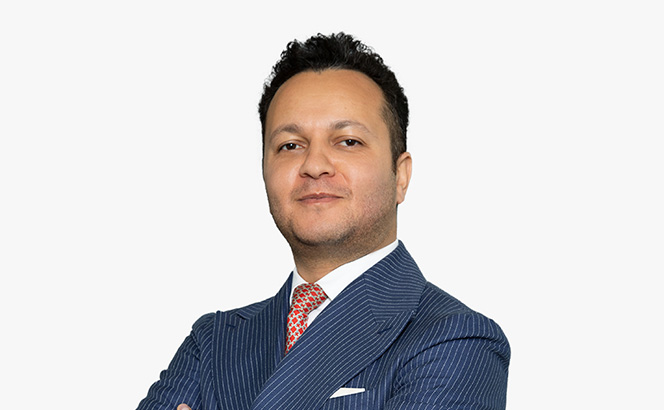
‘These things are decided as you go’, says Mahmoud (pictured right). ‘We wanted to make sure the Schulte folks felt an alignment to us, and we felt an alignment to them. And that’s not just happening in London, but other offices where we are combining.’

Coleman concurs. ‘People look at this combination and say, “You guys are so much bigger, you’re going to swallow them up.” But we’re being really careful not to do that, and to lean into the best of both firms, in London and beyond. Josh and Aymen, working with Graham, will be able to do that.’

Mahmoud argues that sharing leadership in this way breeds not just collegiality but dynamism. ‘If you look at our partnership in London, there are tons of folks who have been the leader at other points in their career,’ he says. ‘It’s not about titles. It’s about getting a bunch of people around the table who can see a strategy and execute it.’

‘It’s not about hierarchy. It’s about clarity of vision for what we are building and how proud we are of the way we’re doing it.’

This approach extends beyond the partnership. Coleman explains: ‘When it comes to our C-suite, there’s no, “You’re a McDermott person so your role is enshrined”, or, “You’re a Schulte person so you’re safe.” It’s about having the best of the best moving forwards. There’s no distinction in where that talent could come from, whether it’s McDermott, Schulte, or somewhere else.’

To this end, the firm has installed an ‘integration management office’, with which it is encouraging open communication among staff from a range of business functions, considering ideas on everything from tech to benefits and talent management.

‘Process and paperwork were probably the last thing that we cared about. You don’t draw up contracts for marriages’ – Ira Coleman, McDermott Will & Schulte

There are obvious synergies in the merged firm; for example, between Schulte’s strength in funds and private capital on the one hand, and McDermott’s sector expertise in healthcare and life sciences on the other.

In terms of office crossover, Schulte’s three locations – New York, London and Washington DC – are unsurprisingly cities where McDermott also has a base, and so decisions on combining staff under one roof will need to be thrashed out.

The combination creates significant strength in New York in particular, bringing the firm to a total of almost 230 partners and more than 550 lawyers, according to the two legacy firms’ websites before the merger went live.

‘The London market’s not slowing down, and it’s no secret to anyone that our firm has been making big investments in London and New York’, says Mahmoud. ‘We’re aiming for growth across the entire platform. The aim is to add everything we don’t have and strengthen everything we do have, so we can become an elite legal services provider.’

For Coleman, the success of the deal will be determined by the two legacy institutions’ willingness to work together.

‘We really leaned in on the people-first, client-first parts of it’, he says. ‘Process and paperwork were probably the last thing that we cared about. You don’t draw up contracts for marriages. You can do prenups and postnups, and I get that. But the love and compassion and partnership in a relationship isn’t something that fits neatly into a contract or an agreement.

‘Yes, you want to know what the parameters around it are, what you agreed to. But more than that, you want to be partners.’

Both Coleman and Mahmoud are confident that the results will speak for themselves. Asked for a final statement on the completion of the merger, Coleman says just three words: ‘Watch us grow.’

[email protected]

‘We’re not out of the woods yet’ – partners size up EU-US trade deal

‘It’s worse than it was 12 months ago, but it’s better than it was two weeks ago,’ says Jason Hungerford (pictured right), head of international trade at Mayer Brown’s London office, following the conclusion of EU-US trade negotiations.
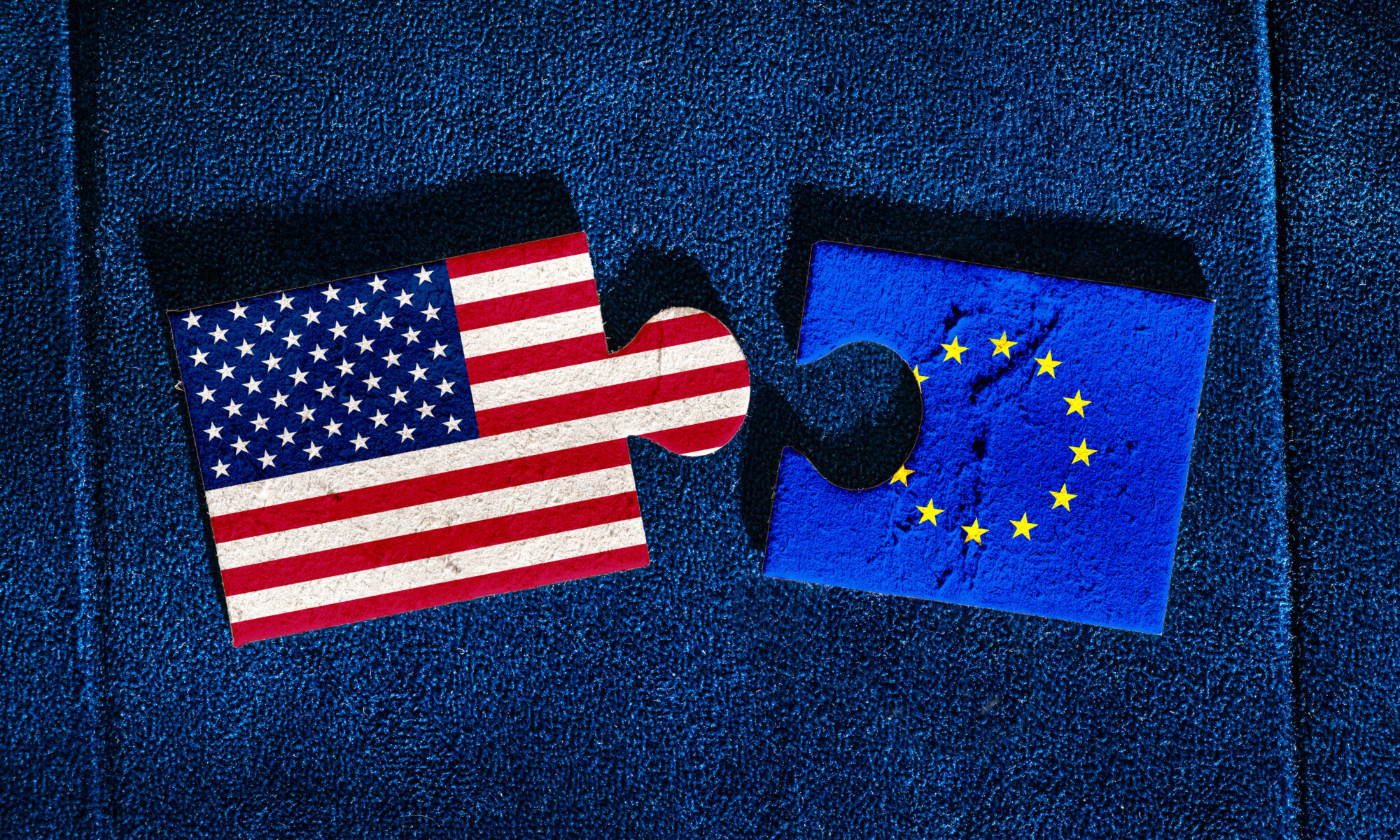
Announced at the end of July, the agreement will impose a 15% tariff on the majority of European imports to the US, meaning the EU will avoid the much higher tariffs roiling global markets, including 35% for Canada and 39% for Switzerland.

But while the deal has been met with relief in many quarters, questions remain over how binding the framework actually is, as well as what its impact on global markets will be.

‘More like appeasement than an actual deal’

One emerging viewpoint among trade lawyers is that the deal can be more accurately described as a political resolution to avoid further tariff increases and quell market volatility.

Aline Doussin, head of international trade and investment at Hogan Lovells, characterises the deal as a political declaration. ‘My immediate reaction is that this is not a binding legal agreement,’ she says. ‘The legal reality has not changed as yet on the EU trade law side.’

‘The ink isn’t even dry, but there’s no ink because it hasn’t even been written yet,’ says Dr Totis Kotsonis, head of subsidies, procurement, trade agreements and remedies at Pinsent Masons. ‘The question is: have we moved on from the unpredictability, and have we given businesses the stability that they require in order to operate and to plan ahead? I don’t think that we have.’

‘My first impression is that it feels more like appeasement than an actual deal. There was a threat, and the EU has at least for a time neutralised it.’ adds Hungerford. ‘A common refrain amongst trade lawyers working on free trade agreements is that |nothing’s agreed till everything’s agreed”, and I think everything being agreed is still at some undetermined point in the future.’

‘Non-standard economic coercion’

Kotsonis points to the need for security in agreeing the deal: ‘The EU was effectively stuck – they had no other viable choice but to accept what was on offer,’ he says. ‘The elephant in the room here is the fact that Europe and the EU are dependent on the US for their security.

‘There’s a lot of unpredictability, but the last thing the EU wanted is escalation – nobody can afford the EU and the US starting a full-on trade war that could escalate into other areas like security.’

Doussin (pictured right) points to the need for stability and reassurance in the market. ‘The key message that everyone in the EU agrees on is that certainty is definitely welcome – both clients and the market were very very nervous of the 1 August deadline to make a deal. So putting a pause on that is very much welcome by the market.’

Referring to the atmosphere of volatility around global trade since US President Donald Trump’s ‘Liberation Day’ tariffs announcement on 2 April, Hungerford says that the US administration had been using ‘non-standard economic coercion’ to achieve their aims. ‘We haven’t really seen that use of those kinds of provisions before,’ he says. ‘It feels like everything’s on the table when it comes to the US achieving its aims.’

The deal also carves out exemptions from the 15% tariff, with European Commission President Ursula von der Leyen noting that tariffs would be cut to zero on products including aircraft and component parts, certain chemicals, and critical raw materials.

Hungerford welcomes this aspect of the agreement, but cautions that challenges remain. ‘It’s got the EU past a difficult position, and there’ll be some immediate relief which will be of great consequence to certain sectors such as aerospace – but we’re not out of the woods yet,’ he warns.

And there are areas of the framework agreement that raise as many questions as they answer.

‘Some aspects of the deal just seem unrealistic to implement or enforce, such as the obligation of the EU to purchase oil and gas in a value of €750m over three years,’ says Baker McKenzie Amsterdam tax partner Nicole Looks, . Capacity in the US is not yet there to satisfy such high demand, and the infrastructure is not there to transport these volumes of LNG from the US to the EU.’

Doussin highlights another legal concern: ‘The big question is whether the deal is compatible with World Trade Organization law, and whether the EU will now be required to open its market to all trading partners on the same terms as those agreed with the US.’

‘Positive mood music’

Jessica Adam (pictured right), co-head of corporate and M&A at Macfarlanes, acknowledges that while uncertainty around the deal remains, dealmakers are taking a pragmatic view: ‘We have to work with the information we have today. Things may change in the future; however, there is always going to be a degree of uncertainty and that needs to be priced in.’

Key metrics from the European Commission’s business and consumer survey results reflect the tentative optimism building in the markets throughout July. The Economic Uncertainty Indicator increased by one point to 17.3, while the the Economic Sentiment Indicator picked up in both the EU (+1.0 points to 95.3) and the euro area (+1.6 points to 95.8).

Speculating on the market impact of the agreement from a business perspective, Adam strikes an optimistic chord: ‘I think we will see an uptick in deal volumes. We’ve already started to see private capital funds gearing up processes to kick off in Q3 and Q4, and doing prep work with a view to launching in Q1 2026.’

And while the UK is not party to the deal, the resulting shift in relative tariff burdens could have knock-on effects: ‘Conversations with private capital funds focused on the UK suggest an increasingly positive outlook, with the UK potentially being seen as a more attractive place for investments compared to the EU, given the 5% tariff difference. There is definitely more positive mood music.’

‘You don’t want to be the test case for this offence’ – firms face ticking clock as new fraud regime draws near

With the UK’s new corporate criminal offence of failure to prevent fraud coming into force on 1 September, firms that are not fully prepared for the new regime are running out of time to get their house in order.

The offence, introduced under the Economic Crime and Corporate Transparency Act, marks a major shift in corporate accountability, placing legal responsibility on organisations that fail to prevent fraud committed by ‘associated persons’ for their benefit – unless they can demonstrate they had reasonable procedures in place.

At Enterprise GC earlier this year, general counsel and other in-house lawyers tackled this subject in a breakout session led by Grant Thornton, and in this Legal Business podcast, financial crime head Tom Townson and business risk director Emma Young reflect on what came out of those discussions, and how businesses are navigating the countdown to compliance.

While some companies, particularly those in heavily regulated sectors, are ahead of the game with their preparations, others still have work to do – and as Townson warns: ‘you don’t want to be the test case for this offence.’

The full discussion is below – the podcast is also available via Spotify or Apple Podcasts.

McDermott and Schulte partners to share London leadership as $2.8bn merger goes live

The London office of the newly merged McDermott Will & Schulte will be co-led by partners from both legacy firms, it has emerged, as the $2.8bn tie-up goes live.

McDermott London managing partner Aymen Mahmoud, who has headed up the firm’s City base for just over a year, will now share leadership of the office with Schulte Roth & Zabel London co-head Josh Dambacher.

The duo will work alongside London senior partner and private equity veteran Graham White, who joined McDermott last March, having previously held senior roles at Fried Frank and Kirkland & Ellis.

While McDermott has around 90 lawyers in London, just over 30 of which are partners, Schulte’s City office is home to just 24 lawyers, including ten partners, according to the firm’s website.

Funds partner Dambacher, who has been at the US firm since 2006, has in recent years co-led the office alongside Christopher Hilditch, who co-founded the base in 2002. Both are ranked in Legal 500’s Hall of Fame for hedge funds.

Leveraged finance partner Mahmoud took the reins of McDermott’s London office last June, succeeding Hamid Yunis, who has since left for Pillsbury.

His time at the helm has seen the firm make a slew of hires, including CMS international private equity co-head Jason Zemmel and Eversheds Sutherland data centre specialist Sebastien Bonneau, both of who joined last autumn. These hires came on top of the additions of Legal 500 acquisition finance Hall of Famer Chris Kandel, who joined from Morrison Foerster in May just before Mahmoud stepped into his role as London head, and Legal 500 mid-market private equity transactions leading partner Fatema Orjela, who joined from Sidley in April 2024.

McDermott and Schulte announced the plan to merge in May, with the combination receiving ‘overwhelming’ partner support in a June vote. The new firm will go by the name McDermott Will & Schulte, with total revenues of more than $2.8bn.

McDermott recently filed its UK LLP accounts for 2024, showing a 33% increase in turnover from £78.7m to £104.7m, breaking the £100m mark for the first time. The results also showed an increase of almost 41% to average member remuneration, from £1.23m to £1.73m.

[email protected]

The path to partnership less travelled: Travers Smith’s Elissavet Grout

While the standard partner track is familiar to most, not all of those who make it follow the conventional route. In this new series, Legal Business shines a light on lawyers with a unorthodox tale to tell about how they got there, starting with Travers Smith tax partner Elissavet Grout, who was made up this year after qualifying at the firm back in 2003.

Why did it take longer than average for you to become partner?

I became a senior counsel some time ago, which gave me the autonomy to work alongside the partners, and to build my own client relationships. That worked really well for me for a long period, particularly as I had a young family. I felt I could give 100% to my role within those parameters, while still maintaining a semblance of a successful family life.

Very early on, it was made clear to me that senior counsel wasn’t a barrier to partnership, nor was it an alternative. So in the back of my mind, I knew that becoming partner was always a possibility, and it was something I started to work towards as I became more of a ‘senior’ senior counsel, and I started to understand what I wanted to get out of the rest of my career.

When did you first start thinking seriously about making partner?

I think there was naturally a change as my children got older. Then came COVID, which gave me more time to think about what I wanted to do. It was a very busy period workwise, but it also gave me space to reflect.

And I just started to feel this shift. I love my clients. I love the technical side of my job. But I began to want to be more involved in decision-making, to be at the table where those decisions are made — to look behind the curtain and be the one making the final calls and shaping the business.

Was partnership always the goal for you, or did it evolve naturally as your career progressed?

I don’t think I had the confidence early on to say, this is what I’m going to do: ‘I’m going to do X, Y and Z by these points in time’. What I did know was that I really enjoyed the job. I enjoyed working in the law. I liked the people I worked with, and I understood the structure of the firm.

Who, and what, has shaped your career the most?

It’s not the same for everyone, I know, but for me, work has always been something that centres me — especially when things in my personal life feel off balance. It’s a space where I’ve always felt confident in what I’m doing.

Mahesh Varia, who headed up the tax incentives and remuneration team until November last year, has probably been the biggest influence on my career, alongside our excellent knowledge counsel Kulsoom Hadi, and all the other tax partners still here, including practice head Russell Warren and Hannah Manning.

Before that, I had the great pleasure of working with Victoria Nicholl, who used to lead our team and was a big mentor to me. At that time, having female partners looking after others wasn’t as common as it is now, so she really stood out.

Then there was Kathleen Russ, who became senior partner but started as a partner in the tax department. She was a formidable lawyer, and I learned so much from her. Siân Keall, who also became senior partner and still works in our employment team, is amazing too.

What matters stand out from your career so far?

Early on, after I was made up to senior counsel, I worked on the Pets at Home IPO — that was just over 10 years ago now — and they’re still a really close client. Similarly, I’ve worked with SSP Group for around a decade. Those kinds of enduring relationships have helped me believe, yes, I can be a partner, because I’ve built relationships that last.

How did it feel when you became a partner?

My family were very proud. But really, it’s just business as usual. I’ve been doing this job for a long time, and I’ve been senior for a long time, so I don’t think it’s felt quite as momentous as it might for some others.

That said, I did have to give my car back — we have a salary sacrifice scheme for employees here, which is excellent, but of course, partners aren’t employees. Honestly, that might have been the saddest moment of my time at the firm. Everyone here knows how much I loved that car, so it became a bit of an in-joke: ‘Who’s going to be the one to tell Elissavet she has to give the car back?’ If there’s been any darkness in the whole transition, that’s probably it.

Paul Hastings London co-chair leaves for Linklaters

Linklaters has hired Mei Lian, co-chair of Paul Hastings’ London office, as a partner in its corporate and structured lending practice.

Lian spent five years at Paul Hastings as a partner in the financial restructuring team. Before that she spent nearly two decades at legacy Shearman & Sterling, becoming a partner in 2009 and working in the firm’s corporate restructuring and insolvency group.

A Legal 500 leading partner for corporate restructuring and insolvency, Lian brings over 20 years’ experience in high-end, cross-border finance transactions and has particular expertise in navigating complex stressed and distressed situations.

Lian shared the London co-chair role at Paul Hastings with Ross Anderson, former banking vice-chair at Latham & Watkins, who joined Paul Hastings in July 2022 as part of a four-partner finance team from Latham.

Her arrival bolsters the Linklaters’ private capital and credit solutions offering and is the latest in a series of additions to its global banking practice. 

In May, the firm hired leveraged finance partners Peter Hayes, also from Paul Hastings, and Angel Quek, from Latham & Watkins, and earlier this month it added an eight-lawyer restructuring and insolvency team in Paris, including François Kopf, who joined as global chair of restructuring and insolvency.

Further high-profile hires for Linklaters in recent months include Matthew Hodgson from A&O Shearman, who joined as the firm’s head of public international law in London in April, and capital markets and New York M&A partner Kristina Trauger, who joined in July from Proskauer, where she headed the firm’s capital markets group.

Paul Hastings, meanwhile, recently added high-profile finance partner duo Corey Wright and Lisa Collier from Latham in New York, and has since April recruited a total of nine energy and infrastructure partners into its offices around the world, largely from White & Case.

Notable recent exits from Paul Hastings include infrastructure partners Jessamy Gallagher and Stuart Rowson, who left for Freshfields in February after two years at the firm. The duo had previously co-headed Linklaters’ global infrastructure practice.

The firm also lost its former global finance co-head, Luke McDougall, who joined Davis Polk in April last year — the same month that highly regarded private equity partner Samantha McGonigle departed to become general counsel at private equity firm Hg.

Aedamar Comiskey, Linklaters’ senior partner and chair, commented: ‘Mei is at the very top of the credit solutions market and will significantly enhance our private capital offering for global clients. She’s a terrific hire and we’re thrilled to have her on board.’

Andy Vickery, global head of finance, added: ‘We are delighted to welcome Mei to our team. Her expertise in credit solutions and her outstanding track record advising global private credit clients reinforce our position as a market leading adviser on complex financings, special situations and restructurings.’

[email protected]

Freshfields Central Europe white-collar defence head decamps for Deutsche Bank

Freshfields’ white-collar defence practice head for Central Europe, Simone Kämpfer, has taken a role at Deutsche Bank, where she will become general counsel and a member of the group management committee from 15 September.

Kämpfer spent seven and a half years at Freshfields, including three and a half as head of white-collar defence for Central Europe. Before this, she worked at Düsseldorf-based white-collar criminal law firm tdwe Rechtsanwälte from 2007 to 2018, and before that as a public prosecutor.

She joins Deutsche Bank with extensive experience advising companies on regulatory matters, governance and investigations, and will be based at the bank’s head office in Frankfurt.

Kämpfer will replace Friederike Rotsch, who has left the multinational investment bank to pursue new opportunities. Rotsch has held the top legal position since September 2023, and prior to this spent 18 years at leading science and technology company Merck, rising through the ranks to become group general counsel in 2014.

In a statement, chief executive officer Christian Sewing said: ‘Friederike has made a significant contribution to Deutsche Bank during her tenure. Her leadership and expertise have been instrumental in dealing with complex legacy cases, navigating a complex environment and shaping our Legal & Group Governance function for the future.’

He continued: ‘Simone brings a wealth of experience in various areas of commercial law and a strong track record in legal leadership. Her widely recognized expertise will be invaluable as we continue to further evolve our Legal department and support the bank’s long-term growth.’

Kämpfer will report directly to Sewing.

Further changes to the leadership team at Deutsche Bank include the appointment of Ralph Nash, who joined the bank in May as head of anti-financial crime for EMEA and global head of regions and standards, as head of anti-financial crime and group anti-money laundering officer, following the departure of Nita Patel.

Freshfields has a long history of working with Deustche Bank, going back to 2014, where the global firm represented the bank in the highly publicised investigation into their alleged attempt to fix the foreign exchange market. Other recent work includes a court of appeal contempt decision in 2023.

[email protected]