
‘I’d rather have a say; I don’t want that late call on a Friday night when something has happened – I want to be in the room.’ Heather Mitchell, Carlyle
As part of our Private Equity Elite, top lawyers share their thoughts on the PE market

‘I’d rather have a say; I don’t want that late call on a Friday night when something has happened – I want to be in the room.’ Heather Mitchell, Carlyle
As part of our Private Equity Elite, top lawyers share their thoughts on the PE market

From dating apps to entertainment venues, airports to music collections, there’s almost no industry left untouched by the multitrillion-dollar private equity market.
And, with these secretive organisations continuing to diversify their business into new asset classes such as infrastructure and credit, it’s an industry that is not only still changing but also still growing. Continue reading “High achievers – private equity is changing; meet the elite GCs at the vanguard of the transformation”

Shearman & Sterling, 1996-2012
Arma Partners, 2013-14
Cinven, 2015-present
I come from a family of lawyers. My father was a lawyer, my uncle was a judge, so there was maybe some bias. What I like about the law is that it is very analytical and it rewards logic. You are trained to analyse any issues in a systematic way. Continue reading “‘A PE firm is one of the most interesting places for an in-house lawyer’ – Cinven GC Babett Carrier”

Year of qualification: 2002
University of Chicago Law School, 1997-98
Simpson Thacher & Bartlett, 2000-06
Avenue Capital Management, 2006-08
Gibson, Dunn & Crutcher, 2008
KKR & Co, 2009-present
I joined KKR 15 years ago. At that point the team consisted of about 40 people focused purely on private equity. Fast forward and there’s been a huge shift – today we are an alternative asset manager; we cover multiple asset classes including infrastructure, real estate and credit. Continue reading “‘Private capital is a super creative industry’ – KKR Europe GC Susanna Berger”

Year of qualification: 2007
Clifford Chance, 2005-09
Bridgepoint, 2010-present
It was never really a conscious decision to go in-house; I came on secondment from Clifford Chance two years after qualification, when Bridgepoint had just hired [former Travers Smith private equity head] Charlie Barter as its first GC. It was right back at the start of PE houses getting more sophisticated in terms of their in-house legal functions. Continue reading “‘My time on non-legal is the same as my time on legal’ – Bridgepoint GC Rachel Thompson”

Clayton Utz, 2005-06
Blake, Cassels & Graydon, 2006-14
Ontario Teachers’ Pension Plan, 2014-present
I ended up working on private equity deals not by design, but rather by chance. I started out my career in Australia as a financing lawyer and when I moved to Canada I transitioned to general corporate work. Over time my practice evolved to support primarily US private equity clients investing into the mid-market in Canada. Since moving in-house I have had the opportunity to support our Ontario Teachers’ private equity team globally, as well as our other asset classes. Continue reading “‘Working in private markets keeps you on your toes’ – Ontario Teachers’ Pension Plan’s Melanie Sanchez”

Year of qualification: 2008
Freshfields Bruckhaus Deringer, 2006-17
CPP Investments | Investissements RPC, 2017-present
I love the diversity of deals that come across my desk as a PE lawyer. The opportunity to learn about different sectors and businesses while still building deep relationships with colleagues. I am also one of those lawyers who likes the adrenaline rush of getting a deal over the line, and PE ticks that box. Continue reading “‘If you like a fast pace, private equity will deliver’ – CPP Investments Europe legal chief Leigh Partridge”

Skadden, Arps, Slate, Meagher & Flom, 2008-14
Silver Lake, 2014-present
Silver Lake turned me into a private equity lawyer. Before that I was working as an M&A generalist, mostly for large corporate clients, in private practice at Skadden in London. This was a decade ago, and I could see that private equity was having a moment – abundant capital to deploy, the most exciting, complex and high-profile transactions and I wanted to be a part of that. I saw going in-house with Silver Lake as an opportunity to work closely with some of the most sophisticated investors in the market on cutting-edge transactions. Continue reading “‘The PE industry is in a unique position to effect change’ – SilverLake EMEA GC Katherine Brody”

Year of qualification: 2010
Macfarlanes, 2008-15
Winton Group, 2016-23
Montagu, 2023-present
Why did you want to become a private equity lawyer?
I was previously a funds lawyer at a private practice firm and wanted to be client-side from early on. No day is ever the same – there’s so much for a lawyer to be involved in and it’s very fast-paced, which I enjoy.
What has been the most memorable moment or deal of your in-house career?
Not sure I have one moment – I have been very lucky to be involved in many projects ranging from fund launches, spin-outs, and fund mergers with talented colleagues.
What do you think will be the biggest issues in private equity in the coming years?
PE is currently facing a new swathe of regulation (not all of it drafted with PE in mind), particularly in the US and separately in the ESG/D&I space. We’re preparing by using advisers where appropriate, and trying to get on top of issues early.
Across the board in law, there’s likely to be an increase in adopting AI solutions for certain tasks, which creates a big opportunities (particularly in-house where we typically have very small legal teams) but also requires adopting different ways of working.
Why would you recommend a career in private equity?
In private equity, every day is different and the work is incredibly varied – there’s something for every legal specialism. You also get to work with great people.

Year of qualification: 2010
Slaughter and May, 2008-13
Och-Ziff Capital Management, 2014-16
HPS Investment Partners, 2017
Inflexion, 2017-present
Within law, the transactional side felt like the natural destination for me and, within that, PE always stood out. Continue reading “‘The DWF take-private was headline-grabbing and justifiably so’ – Inflexion GC Andrew Stevens”

Squire, Sanders & Dempsey, 1996-99
Kaiser Group International, 1999-2001
Akin Gump Strauss Hauer & Feld, 2001-02
Carlyle, 2002-present
I absolutely love my job. There’s a natural synergy in my roles as GC for global investments and chief risk officer – our team has evolved from being the best M&A lawyers managing transactions to also being a crisis response centre. This has happened as Carlyle has grown significantly over time and become much more complex – whether you’re looking at asset class, sector or geography. Continue reading “‘I work with the best M&A lawyers in the world’ – Carlyle’s Heather Mitchell”

Year of qualification: 2006
Travers Smith, 2006-10
Barclays Capital, 2010-13
GIC, 2013-present
Why did you want to become a private equity lawyer?
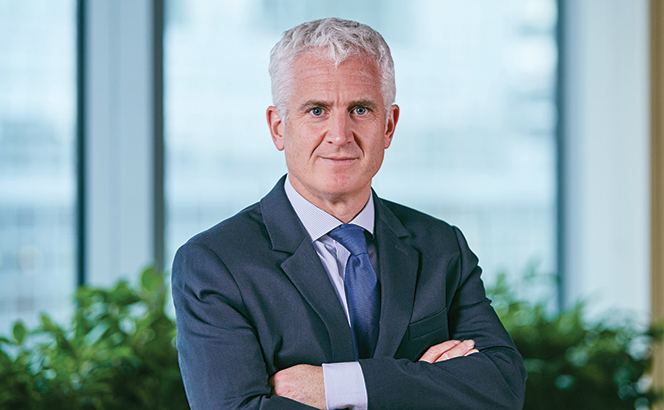
I trained at Travers Smith – I had the time of my life as a trainee and junior lawyer in the private equity team. Continue reading “‘I had the time of my life as a trainee at Travers’ – GIC’s Jarlath Pratt”
Year of qualification: 1999
White & Case, 2001-05
D.B. Zwirn & Co, 2005-10
Charterhouse, 2010-present
Why did you want to become a private equity lawyer?
I didn’t really – I originally wanted to be a journalist but once I did law, I was very keen to go in-house and get closer to the business. Continue reading “‘There are many memorable moments that that can’t be shared’ – Charterhouse GC Tom Patrick”

Year of qualification: 1990
Freshfields Bruckhaus Deringer, 1998-2008
Vinson & Elkins, 2008-15
Hudson Advisors, 2016-17
Lone Star Europe Acquisitions, 2018-present
Why did you want to become a private equity lawyer?
My career in private practice largely pre-dated the concept of being a private equity lawyer. My background has always been in finance, doing a range of financing transactions across different sectors and a range of clients, which turned out to be a great foundation for working with private equity firms and the wide variety of investments that they consider.
What has been the most memorable moment or deal of your in-house career?
That is Lone Star’s investment in Novobanco, a large commercial bank based in Portugal which had been created by the Portuguese central bank in their resolution process for Banco Espírito Santo. The investment process took over 18 months to get to closing. After complex negotiations with the Portuguese state for the investment, we then sought clearance from a range of financial and market regulators, including DG (Comp), the ECB and local European regulators as well as the regulatory authorities in several other countries where the business was located. We also designed a new governance structure for the bank that was novel in the Portuguese market and in which I ended up as a participant as a non-executive board member.
Which sectors are you expecting to drive activity this year?
Lone Star is an opportunistic investor and activity is heavily influenced by the markets in the relevant sectors and geographies. For the real estate business, I expect we will remain active in the UK, Scandinavia, Germany and Austria for both direct real estate investments and structured debt transactions. For the corporate side of the business, activity levels remain high, continuing Lone Star’s strong track record with corporate carve-out transactions and more opportunities for secondary private equity transactions where older funds are seeking to divest their portfolio company investments.
Why would you recommend a career working in private equity?
Private equity is a very broad church which covers many firms of different sizes as well as multiple investment strategies and asset classes. The sector now deals with a wide range of legal and regulatory matters, which gives in-house lawyers lots of opportunities, wide responsibilities, scope to participate in more sectors and industries than most other comparable positions, in an environment where teams are typically still quite small and each individual lawyer has a high-profile and measurable impact on the success of the business.

Year of qualification: 2009
Columbia Law School, 1995-98
Cravath, Swaine & Moore, 1998-2005
Citi, 2005-11
Silver Lake, 2011-19
Apollo Global Management, 2019-present
I started my career at Cravath, Swaine & Moore in New York. It was a deliberate choice – I had thought I’d work somewhere more international, but ended up picking Cravath because of its reputation in dealmaking and M&A. Also, it famously has a rotation system where you move from practice to practice every 12-18 months. It meant you became a well-rounded lawyer. Continue reading “‘I liken myself to an octopus with many tentacles in different places’ – Apollo’s Seda Yalçinkaya”

Year of qualification: 1994
Weil Gotshal & Manges, 1996-2007
DLA Piper, 2008-11
Ropes & Gray, 2011-22
Bain Capital, 2022-present
What made you decide to make the switch in-house? And how have you found the change?
After a very enjoyable and fulfilling, decade-long career with Ropes & Gray – first as partner and then as London managing partner – and following an inspiring year-long secondment to Bain Capital, I was asked to stay on as general counsel for the firm’s European private equity business. I had worked with Bain for many years at Ropes, so I had a good familiarity with and understanding of its business. During this time and my secondment, I easily connected with the firm’s culture and values, I enjoyed having a wide range of subjects to cover, and I developed strong relationships with the team. While I loved working in private practice, I thought this was a unique opportunity to join a team that identifies complex opportunities to create exceptional outcomes for its companies, employees, and communities.
What has been the biggest difference compared with private practice?
The biggest differences are the operating model and functional approach. For the former, I was one of a large team focused on private equity transactional work. Now, I am part of a smaller team that covers a much broader set of responsibilities from deal transactions across multiple industry verticals to fund raising, portfolio company matters, and regulatory affairs, among other things.
What are the key skills needed for working in-house compared with private practice?
The skills needed for any career in the legal profession are common: a keen sense of curiosity, strong analytical and written skills, concentrated attention to detail, and an ability to remain calm and adaptable to circumstances. However, when working in-house – due to a wider portfolio of responsibilities – a workday can be less predictable. So, time management skills, an ability to prioritise, and understanding the needs of the business are vital.
What has been your in-house career highlight, and why?
My career highlights have been less about business transactions or work-related dealings but more about feeling personally linked to the firm’s values and purpose and connected with the team across the business globally. It is also about working with brilliant colleagues in the legal team and across the platform to deliver for the business and find the right solutions. Today, there is no shortage of highly capable asset managers but one of the things that drew me to Bain Capital is the culture and the firmwide approach to solving business challenges, partnering with people on the journey to create lasting impact.
What tips do you have for building a career in-house in private equity?
What’s important in any career is building enduring, collaborative, trustful relationships and connection with a diverse set of industry and work partners. Also, it is important to spend time to make sure you understand the business and be proactive in anticipating issues and challenges.

Year of qualification: 2007
Slaughter and May, 2005-14
Goldman Sachs, 2014-18
Vitruvian Partners, 2018-present
Why did you want to become a private equity lawyer?
I have been involved with alternative asset managers since 2005, during the early stages of my training contract with Slaughter and May. I became very interested in funds work and private equity in particular as the industry grew and was increasingly prominent. I then noticed that the larger private equity firms were beginning to hire their first in-house lawyers, and their role seemed to me to combine the elements of private practice I really liked (such as negotiation and structuring) with a broad in-house mandate that wasn’t limited to involvement in only legal matters.
How long have you been working in-house?
I did a secondment at Goldman Sachs in 2008 shortly after qualifying. It was an extraordinary learning experience as the global financial crisis developed. After six more years at Slaughter and May, I then returned to Goldman permanently in 2014 to cover their private equity and private credit business in Europe, along with various fundraisings and firm investments.
What has been the most memorable moment of your in-house career?
A day trip to Boston to sell shares in an IPO stands out. I made the last-minute decision to fly at 8.30am and was on the plane from Heathrow at 11:30am. Having worked the entire flight on organising the logistics and paperwork (being fortunate that the wi-fi worked throughout the flight and using a copy of the Financial Times for my written notes), I was greeted at Boston Logan International Airport by a banker, lawyer, notary and driver. After signing various documents in the arrivals hall, we then made a few stops on the way to hand-deliver the required paperwork to the transfer agent, making it with an hour or so to spare. After a celebratory Sam Adams at the airport I was back home within 24 hours of departing!
Which sectors do you expect to drive activity this year?
I anticipate technology, healthcare and energy as being busy. Closer to home, I also expect to see further activity in financial services, and asset management in particular. I anticipate that traditional asset managers will continue to look to acquire alternative managers, and alternative managers will acquire managers of other products that they don’t currently offer.
Would you recommend a career working in private equity?
Absolutely – the private equity industry has matured considerably during the nearly 20 years I have been working in it. Private equity and other alternative firms are now significantly more regulated, as are their fundraisings and the transactions they undertake. But this actually provides more opportunities for lawyers to enter the industry at an earlier stage in their careers, and more paths they can then take to develop. Working at a private equity firm can also provide more opportunities for lawyers to get involved in other areas (such as HR, operations and tax), than might be the case with other in-house roles. The industry continues to innovate as well, such as on sources of capital for fundraisings and the structure and type of investments.

Year of qualification: 2010
Berwin Leighton Paisner, 2008-11
International Justice Mission, 2011-12
Berwin Leighton Paisner, 2012-13
Bregal Investments, 2013-present
Why did you want to become a private equity lawyer?
To be honest, I did not specifically set out to become a private equity lawyer. I have always sought out opportunities in my career where I am valued, where I can continue to grow and learn, that are dynamic and where I feel I can make a difference. Across the last ten years of working in private equity these boxes have more often than not been ticked across the board. Continue reading “‘You are working with some of the sharpest minds on the planet’ – Bregal Investments funds GC Jonathan Pugh-Smith”

Year of qualification: 1993
Clifford Chance, 1995-2022
CD&R, 2022-present
Why did you want to become a private equity lawyer?
I loved the intersection between the law and the real world. On each transaction you get to understand a new business or sector, and then to think about the many and varied legal issues that impact on it. I also really enjoy the fact it is a real team effort, both internally and externally; as a private equity lawyer you are absolutely core to that team. Continue reading “‘Private equity must be prepared to explain the benefits it brings’ – CD&R’s Simon Tinkler”

Burges Salmon has reported record financial results, with a 27% increase in revenue to £163m, up from last year’s £128.2m.
Profit per equity partner (PEP) surged by 42%, rising from £466,000 to £661,000, marking a significant turnaround from last year’s nearly 10% dip. Meanwhile, net profit climbed 46%, from £34.6m to £50.5m.
‘These results demonstrate the collective strength and dedication of all of our people, during a year that has seen the value of our strategic investments come to fruition’, managing partner Roger Bull said in a statement.
He added: ‘We’ve seen positive growth across the entire firm, stemming from a deep focus on our markets, our people, and, importantly, our clients. Our commitment to understanding and meeting our clients’ needs has been a driving force behind this success.’
The firm credited its performance to its sector specialisms and key practice areas. Its core sector groups – built environment, energy and utilities, financial services, infrastructure, private wealth, public sector, and transport – achieved an average revenue growth of 32%. Leading the charge were the built environment and energy & utilities sectors, which reported impressive growth rates of 40% and 38%, respectively.
A notable highlight of the year was Burges Salmon’s celebration of the five-year anniversary of its Edinburgh office launch in May. Since its opening in 2019, the Edinburgh office has nearly tripled its partner count, growing from three to eight, as part of an 80-strong team. The firm further enhanced its dispute resolution capabilities in the Scottish capital with the hire of Magnus Miller from Davidson Chalmers Stewart in June, marking the first partner in its dispute resolution team in Scotland.
‘Our chosen markets have not only shown resilience but thrived,’ said Bull. ‘We have benefited from these positive market conditions thanks to our targeted approach and sustained investment over the years. Scotland, in particular, stands out as a testament to our growth strategy, where we’re proud to have celebrated our five-year anniversary in Edinburgh with significant organic expansion and the attraction of exceptional talent.’
The firm has also sustained its growth momentum through strategic lateral hires and organic expansion. Since the launch of its 2021-26 strategy, Burges Salmon has appointed 31 new partners and increased its overall headcount by 30%. Among this year’s key appointments is Steven Hull, who joined from Eversheds Sutherland as a partner in the pensions and lifetime savings team. Additionally, the firm made 19 promotions in May, including five new partners: Chris Brown (pensions), Ros Harris (real estate), Tim Williams (tax), Caroline Brown (dispute resolution), and Lydia Cullimore (projects).
Looking forward, Bull concluded: ‘We are excited to build on this momentum and continue to progress the firm’s ambitious strategy for growth.’