Comment: Women redefining City law – a few teachable moments and the odd necessary evil

Lucie Cawood

When high-profile GCs still talk of being mistaken for a PA (as BT’s Sabine Chalmers was not that long ago), it’s a reminder of how much more progress needs to be made to clear the path to the top for women in law.

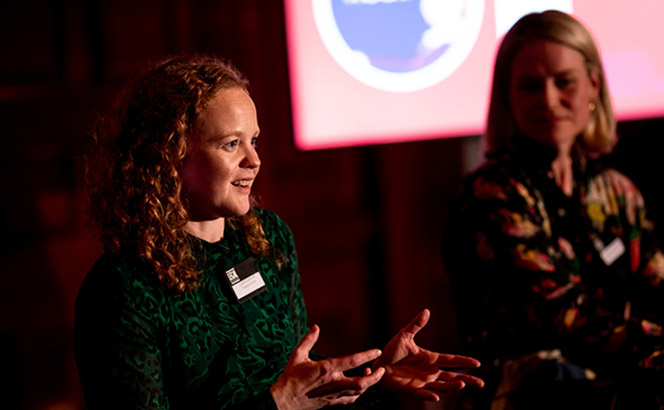
Yes, there has been improvement over the last ten years. According to the panel of female partners and in-house speakers taking part in last month’s Legal Business/Freshfields Bruckhaus Deringer reception championing women in law, the grip of the boy’s club in the City is loosening. Slowly. Continue reading “Comment: Women redefining City law – a few teachable moments and the odd necessary evil”

Life during law: Leona Ahmed

Leona Ahmed

My dad was born in Kashmir and was in the Pakistani Air Force, posted to Turkey. India and Pakistan were separating and he decided he wouldn’t go back. He moved to the UK and met my mum at night school. She worked in a biscuit factory when I was a kid and was all about, ‘You’re going to do better than this.’

I didn’t start working life as a lawyer. I’m Asian and started in retail – freshly-squeezed orange juice and health food products. My dad wasn’t impressed. He was first generation here and said: ‘This is a fantastic country with great opportunities, I did not come here for you to be another Asian shopkeeper.’ Continue reading “Life during law: Leona Ahmed”

Under the influence – how pressure to climb the ladder can corrupt in-house counsel

Being risk savvy and commercially aware is the equivalent of ‘leaning in’ for today’s in-house lawyer. Can one do this and retain the mantle of professionalism? Or rather, how can one do that? That is the central concern of our book, In-House Lawyers’ Ethics: Institutional Logics, Legal Risk and the Tournament of Influence. We interviewed dozens of in-house lawyers and surveyed 400, mainly from business but also from government and the third sector, to shed light on the ethical dimensions of in-house practice and risk management. Our central lessons? Organisations matter. Individual lawyers matter. Ideas about the in-house role and professionalism matter. Talking about professionalism and good decision making openly and frankly matters.

The usual academic analysis of in-house lawyers dwells on concerns that in-house counsel are business people first and lawyers a distant second, but we think other questions are more important and useful. In particular, we are interested in how in-house roles and practitioner mindsets about those roles influence their ethical inclination. When we work with in-house teams using the tools in our book, they are often astonished at the different views they and their colleagues have about what in-house lawyers should be like; how they draw on ideas of professionalism; and how to deal with ethical dilemmas. Gordon Gekko can be lurking in the most surprising of places. Continue reading “Under the influence – how pressure to climb the ladder can corrupt in-house counsel”

Client profile: Matt Wilson, Uber

Matthew Wilson

‘I wrote my own resignation letter twice in the first six months,’ Matt Wilson, Uber’s associate general counsel (GC) for Europe, the Middle East and Africa, says. ‘I didn’t hand it in either time, but it was close.’

A frank, but not surprising, admission. Wilson has, in the view of one peer, had one of the most difficult jobs in the GC community since he became the ridesharing company’s first domestic UK lawyer back in 2015. Continue reading “Client profile: Matt Wilson, Uber”

City horizons: The Legal Business view on the profession for you to cut out and keep

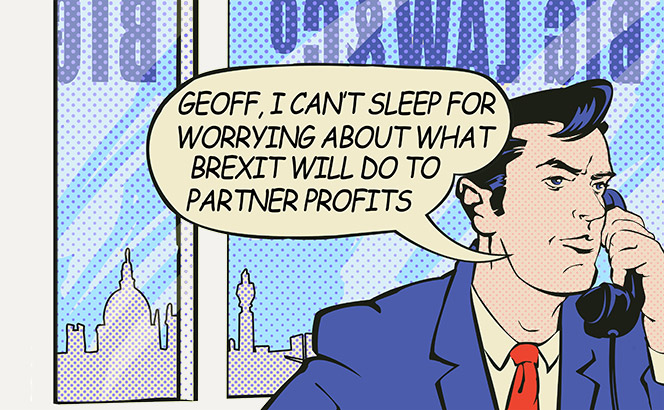
brexit phonecall

On occasion, we are asked to give our house view at partner conferences and the like. Undertaking one such gig last month for a top-50 UK law firm while the government unhelpfully melted down in the background, I put down some notes on the outline questions the law firm asked me to address before the conference. Obviously, I was not reading my notes in front of the audience in a two-way Q&A and did not stick to the script, but with a little scrubbing up and the identifying information removed, the notes seemed a decent compilation on the kind of topics that Team LB is frequently asked to opine on.

***

Continue reading “City horizons: The Legal Business view on the profession for you to cut out and keep”

The Simmons interview: What to worry about

Colin Passmore

Legal Business: Simmons seems to have come out of a period of malaise. What have been the primary drivers for that growth over the last two years?

Jeremy Hoyland, managing partner: Most of that has been driven by the sectors, so [opening in] Ireland is not because we’re interested in the domestic market. We’re interested because it’s an important market for banks and funds. Continue reading “The Simmons interview: What to worry about”

Legal tech focus: Is Kira the real deal?

Noah Waisberg

AI contract analysis system Kira has been on a trying journey. Having landed $50m in funding, Hamish McNicol and Thomas Alan assess how much longer that journey could last

Noah Waisberg recently threw a diamond into an audience of more than 1,000 people. It was the annual Legal Geek legal tech conference in London. Public Enemy’s Don’t Believe the Hype blared as he took the stage. Continue reading “Legal tech focus: Is Kira the real deal?”

Legal tech focus: Slaughters’ tech ally Luminance makes impact but battle for City elite wages

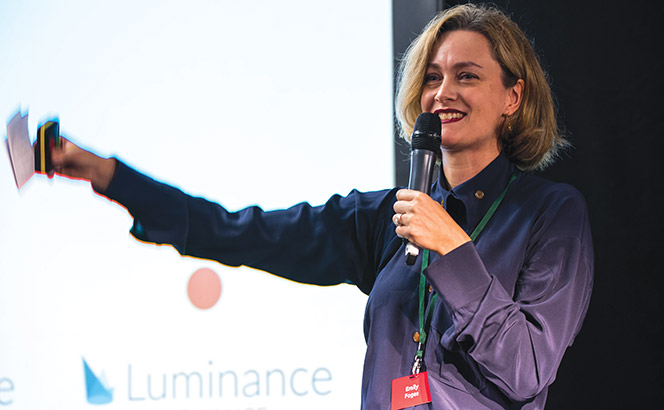
Emily Foges

Luminance has shot to prominence unlike any other UK legal tech start-up. But Hamish McNicol finds there is still plenty to do to break into the top of the profession

‘We’re changing things to the extent Excel changed the way accounting is done,’ Luminance chief executive Emily Foges proclaims. ‘You can’t imagine doing anything financial without it.’ Continue reading “Legal tech focus: Slaughters’ tech ally Luminance makes impact but battle for City elite wages”

The GC (re)defined: Beyond the cookie cutter

Angelique de Lafontaine

What is it like to work as a lawyer in a fast-paced, risk-laden, tech-driven ‘disruptive’ company? How do general counsel (GCs) find the right level of resource in a company where legal is viewed as anathema to impatient entrepreneurs? When is a lawyer not a lawyer?

These are the questions we put to senior in-house figures we gathered from a broad range of early-stage or fast-moving, disruptive companies in our round table with Morrison & Foerster. Continue reading “The GC (re)defined: Beyond the cookie cutter”

The GC outlook: more for more and more to come

Alex Novarese

As a long-term observer of the legal profession, I view the development of GCs with an oxymoronic mix of admiration and cynicism. Admiration because common claims about the dramatic improvements in the calibre and size of the talent pool in the in-house profession are that rarest of beasts: a received wisdom that turns out on inspection to be largely true. Cynicism because those strides are often mixed with unwillingness to tackle the ethical and practical implications that come with increased clout.

Neither does much commentary account for the complex, love-hate relationship between GCs and law firms or the powerful impact of the career incentives that in-house counsel face on the development of the legal industry. Continue reading “The GC outlook: more for more and more to come”

PRIME and the rise of the tick-box ‘solution’

Social mobility Banksy-style

The sheepish evasion now emanating from the once-lauded social mobility project PRIME is an abject lesson in what ethically ails the modern profession. Flashy initiatives, heavily promoted and then… nothing. Because the truth is that large commercial law firms confronted with all manner of social dilemmas have developed an increasingly unhealthy reflex response of reaching for gestures to give the facsimile of action with at best minimal focus on tangible results.

As you can see in Thomas Alan’s piece this month, the lack of rigour and quantifiable results emerging from PRIME, the most celebrated response to a social affairs issue to ever emerge from the commercial UK profession, is an ominous sign for an industry that purports to be getting more progressive. Continue reading “PRIME and the rise of the tick-box ‘solution’”

Whatever happened to PRIME? – Drift sets in for once lauded diversity project

Social mobility Banksy-style

Thomas Alan assesses the initially lauded, now forgotten social inclusion initiative

‘Forgive my ignorance, can you tell me what you mean by PRIME? What is it exactly?’ asks one partner at a top-25 UK law firm, a partner charged with responsibility for overseeing apprenticeships at a firm with membership to that same cross-industry group. Continue reading “Whatever happened to PRIME? – Drift sets in for once lauded diversity project”

Pharma just the tonic for US firms leading on Boston Scientific’s £3bn bid for BTG

Laurence Levy

An array of City and US firms have landed roles advising on Boston Scientific’s buyout of British healthcare firm BTG in the latest bumper deal in the pharmaceutical sector. Allen & Overy (A&O), Shearman & Sterling, Travers Smith, White & Case, and Arnold & Porter Kaye Scholer were all called upon to advise on the deal, continuing a spate of takeovers in the UK healthcare market.

Shearman acted as lead counsel for longstanding client Boston Scientific, with a team headed by New York corporate partner Clare O’Brien alongside London-based veteran Europe and Middle East M&A head Laurence Levy. City firm Travers worked alongside Shearman, with partner Mahesh Varia advising on share option schemes, while Arnold & Porter Washington DC antitrust partner Michael Bernstein was also drafted in by Boston Scientific. Continue reading “Pharma just the tonic for US firms leading on Boston Scientific’s £3bn bid for BTG”

Dealwatch: Pre-Christmas run of real estate and power deals for US and City players

Softbank
  • Herbert Smith Freehills (HSF) is advising entertainment and communications company ARRIS on its proposed $7.4bn acquisition by CommScope Holding Company. The HSF team is led by corporate partners Gavin Davies, Alex Kay and Caroline Rae. Pinsent Masons is acting for CommScope on the acquisition with corporate partners Rob Hutchings and Roberta Markovina leading. Alston & Bird also advised CommScope while fellow US outfit Troutman Sanders acted alongside HSF for ARRIS.

Continue reading “Dealwatch: Pre-Christmas run of real estate and power deals for US and City players”

Globetrotters in Europe: Dentons and White & Case expand operations as Weil scales back in CEE again

Düsseldorf

Global players scaled up their investment in continental Europe this autumn, with Dentons launching its fourth German base and White & Case growing its French team. Meanwhile, Weil, Gotshal & Manges has shut its doors in Prague, its second office closure in central and eastern Europe (CEE) in 2018.

Dentons’ fast-growing German branch hired Taylor Wessing’s former head of competition, EU and trade, Andreas Haak, and employment partner Sascha Grosjean to lead the opening of the new outpost in Düsseldorf in January 2019. Germany managing partner Andreas Ziegenhagen told Legal Business the firm aims to have around 30 lawyers in the city in Germany’s industrial heartland, bringing the total headcount in the country to over 200. Continue reading “Globetrotters in Europe: Dentons and White & Case expand operations as Weil scales back in CEE again”

Bumpy road for US firms in Asia as Reed Smith, Cleary and Shearman lose out to local players

Hong Kong

China and Hong Kong are becoming increasingly challenging places for the global elite as the competition for talent from local shops intensifies. Among the most recent victims were Reed Smith, Cleary Gottlieb Steen & Hamilton and Shearman & Sterling, which lost out to Australian firm MinterEllison, King & Wood Mallesons (KWM) and Fangda Partners respectively.

A six-partner disputes team of David Morrison, William Barber, Nathan Dentice, Alex Kaung, Eddy So and Desmond Yu quit Reed Smith’s Hong Kong base over what Asia-Pacific managing partner Denise Jong described as client conflict issues. They will join MinterEllison at the beginning of next year. Continue reading “Bumpy road for US firms in Asia as Reed Smith, Cleary and Shearman lose out to local players”

Still more promise than delivery but Paul Hastings shows signs of progress

The Co-operative Bank

Thomas Alan assesses the fortunes of the US giant after a (relatively) expansive 2018

Paul Hastings’ recent London history could be seen as a story of tempered ambitions. In the mid-2000s, the firm talked about hitting 200 lawyers in the City, while in 2012 the hope was to be at around 140 lawyers by 2016. With lawyer headcount only reaching 100 this year, it is clear that those lofty ambitions are hard to realise. However, between 2012 and 2017, the firm’s City headcount increased by 78%. If you aim high, falling short does not mean disaster. Continue reading “Still more promise than delivery but Paul Hastings shows signs of progress”

Deal View: Warlords in Paris – Kirkland’s long march to the French capital

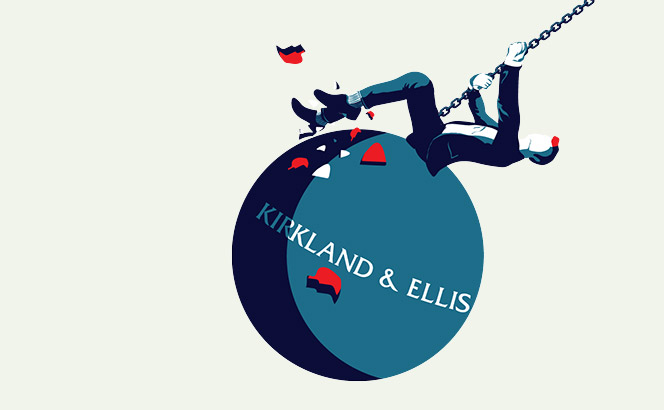
riding on a Kirkland & Ellis wrecking ball

For a 109-year-old giant that fielded just 12 offices at the beginning of 2017, Kirkland & Ellis has had an expansive 18 months. Of course, there is never a better time to invest than the year in which your firm became the highest-grossing legal outfit in the world as Kirkland did in 2018 after posting $3.165bn. But it is still notable that of the five branches launched since Jeffrey Hammes took over as chair in 2010, three were announced since May 2017.

While earlier Boston and Dallas launches reflect a well-established ambition in its home market, news of Kirkland’s plans for a new arm in Paris signal a more symbolic extension of empire. Only Kirkland’s third branch in Europe, it comes more than two decades after London and almost 14 years after its Munich debut. Continue reading “Deal View: Warlords in Paris – Kirkland’s long march to the French capital”

Letter from… Singapore: A warm welcome and slick offering keep Singapore ahead in the race to be Asia global hub

Singapore graphic

The view from Fort Canning Hill is telling. You stand next to an early 20th century lighthouse, a testament to Singapore’s early success as a maritime trade hub. It shut in 1958, as the skyscrapers vaulting up rendered it hardly visible from the sea – a port at the crossroads of India and China was becoming a major financial centre.

Today instead of the sea, the view is of dozens of buildings hosting international banks, insurers, manufacturers, tech companies… and of course, lawyers. A city-state of just five and a half million is home to almost 1,000 national and 150 international law firms, making it one of Asia’s two dominant global hubs alongside old rival Hong Kong. Continue reading “Letter from… Singapore: A warm welcome and slick offering keep Singapore ahead in the race to be Asia global hub”