Is the next front on diversity in the profession targets for ethnic minority representation? The industry looks to be slowly moving that way with the news that Clifford Chance (CC) is committing to a host of new targets aimed at boosting diversity.
Though the package unveiled today (14 July) is focused on representation on many fronts, it will be CC’s new commitments on ethnic diversity that will attract the most attention. The firm is aiming to have 15% of its UK and US partner promotions and lateral hires from minority ethnic backgrounds by 2025, averaged over the previous five-year period. There is an additional target of 30% representation for senior associates and senior business professionals in the same region by 2025 as a whole, not just hires and promotions. Continue reading “CC breaks ground with 15% ethnic minority target for partners but can the profession follow through?”
The other day we were presenting a webinar on ‘The Lawyer of the Future’ to a firm’s summer associate class, now in the midst of their remote June and July programme, and the question came up, ‘What do associates need to know?’
Recent times have been witness to the steady rise of nationalist regimes across Latin America. With a number of unprecedented landslide victories in the past years, concern has risen among many of Latin America’s business leaders. Latin America’s C-suites are feeling increasingly squeezed by this resurgent nationalism at home and the possibility of tightened regulations, and even indirect government expropriations, all against the backdrop of increasingly severe limitations on private businesses introduced by Latin American governments in response to the COVID-19 crisis. The combination of these factors has intensified concerns about the strength of the corporate rule of law and the durability of the capital base in a number of Latin America’s largest economies.
Boards of Latin American companies are increasingly struggling with the changing political dynamics (often phrased as a response to the global pandemic) and their impact on the business environment. As a general principle, these boards have a fiduciary obligation in the context of risk management to assess how best to protect continuity of their domestic and international business. In certain circumstances, a Board may determine that the potential risks are significant enough to the business that it consider other jurisdictions outside of Latin America with: (a) a superior venue to access capital markets, (b) a corporate legal system to attract and retain (international) equity investors, (c) bilateral investment treaty protection to address expropriation risk, (d) more attractive COVID-19 government relief programs for private industry, and/or (e) tax efficiency.
At the same time, it has never been easier or more advantageous for Latin American corporations to tap into foreign capital markets, with compatible access to favourable tax rates, and improved governance structures abroad. More Latin American companies are listing on foreign exchanges at a time when a number of the key Latin American stock exchanges are in decline. Some corporations are contemplating the relocation of headquarters from a Latin American jurisdiction to one outside of the region. This form of “corporate migration” enables companies to strengthen the continuity of their existing manufacturing or operational facilities in their domestic market while taking advantage of lower tax rates and more favourable legal and regulatory environments outside of Latin America, particularly in the United States and neutral jurisdictions in Europe, like Spain, the Netherlands, the United Kingdom and Luxembourg.
That Latin American corporations are extending their gaze beyond the continent is not unexpected. Latin American businesses have read this script before. When a resurgent populist Argentina expropriated Repsol’s majority ownership of oil and gas producer YPF in 2012, then-President Cristina Fernández de Kirchner justified the move as a “recovery of sovereignty and control.” After years of political and legal struggle, Repsol eventually settled for $5bn in bonds – less than half of what it claimed in damages. At present, the handful of similar expropriation cases resulting from the Venezuelan crisis only further underscores for concerned parties the importance of protecting assets under such populist administrations. Continuing to create jitters – Cristina Fernández de Kirchner was recently elected as Vice President of Argentina.
Outside the region, meanwhile, opportunity knocks. Foreign listings on US exchanges, and even dual listings, generally do not cause the compliance headaches that many corporate managers dread. There is no requirement that a holding company be incorporated and listed in the same jurisdiction. Foreign private issuers benefit from more lenient reporting requirements and governance restrictions than US and many European publicly traded companies. For example, rather than adhere to US accounting standards, such entities often need only to disclose the manner in which their own accounting methodologies differ.
The process of corporate migration is supported by a raft of trade and tax treaties and a well-developed regulatory infrastructure. With these components in place, companies’ manufacturing and production operations can remain in their home base in Latin America even as they relocate their headquarters and corporate governance functions overseas. This process is complex, requiring companies to consider questions such as whether to migrate an existing company or place a new company, incorporated in the new jurisdiction, at the top of a Latin American company’s group.
Well-developed corporate law and governance regimes abroad make business outcomes elsewhere more predictable. A broad tax treaty network, with most following the OECD model treaty, largely protects companies from double taxation issues. The European network of bilateral investment treaties (BITs) offers protection against the potential nationalisation of business and other assets and a point of leverage in negotiations with State actors. It also promises binding arbitration before an international chamber such as the United Nations Commission on International Trade Law (UNCITRAL). All of these protections are brought further into relief by government action in Latin America as a consequence of the global pandemic. Many of the government measures enacted are attempting to balance competing economic and public health interests, the disruption they cause proportionate to the global health risk. However, measures that are taken for overtly protectionist reasons or that otherwise lack credible public interest justifications may constitute violations of foreign investor rights under Bilateral Investment Treaties. General counsel and board members should bear in mind the protections that may be afforded to their companies by international treaties in the current global crisis.
Some of the most favourable jurisdictions for listings and corporate migration include the United States – with Delaware and Nevada among the most popular places to incorporate – and the United Kingdom, Netherlands, Luxembourg, and Spain. Among the myriad factors to consider: shareholder activism, litigation risk, corporate governance regulations (such as residency requirements and board structure rules), debt-to-equity limitations, and investment protection precedents. In this time of heightened uncertainty, the law and consulting firms and banks that advise Latin American corporations would be well-served to examine the detailed contours of each regulatory environment and to assess how best to serve a Board when it considers its fiduciary obligations to manage risks in the interest of their business and its stakeholders.
The Latin American business community remains concerned about the rise of new administrations with a predisposition towards nationalised, state-run businesses and the compounding effect of government measures taken in the context of the global pandemic. Given the ease and promise of accessing capital through foreign exchange listings, and the legal protections inherent in corporate migration, we can expect to see more of Latin America’s business leaders exploring their options for doing business beyond the continent’s grasp.
The authors are partners in the mergers & acquisition practice at the global law firm Jones Day. Mr. McGuinness is based in New York and Mr. Mason is based in London and Amsterdam.
The authors are grateful for the research and analysis for, and contributions made to, this article by associate Scott A. Nelson and former summer associate Rachel Miller.
The views and opinions set forth herein are the personal views or opinions of the authors; they do not necessarily reflect views or opinions of the law firm with which they are associated.
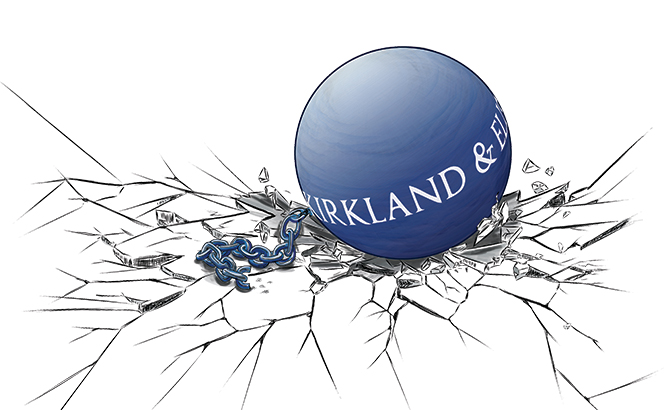
In my line of work you’re supposed to pretend ideas come out of nowhere but this column was triggered by a well-argued piece by my former parish noting the contrast between senior lawyers let off with fines for regulatory breaches while juniors are routinely struck off. The question in a nutshell is why juniors are banned while senior hands like Gary Senior at Baker McKenzie and Ryan Beckwith at Freshfields Bruckhaus Deringer were been fined for failings linked to sexual advances to staff. Senior was in June handed a £55,000 fine, reopening the debate but the Junior Lawyers Division of the Law Society had the previous month already publicly proclaimed its loss of confidence in the Solicitors Regulation Authority (SRA) following its prosecution of rookie lawyers with apparent mental health issues.
More than a decade after the 2008 global financial crisis, the world finds itself gripped by a pandemic and the resulting economic turmoil. As we saw in 2008, law firms won’t escape the impact of the recession, particularly as clients trim budgets and reduce demand for legal services. But unlike companies with diverse sources of capital, law firms, still predominantly structured as partnerships, will more acutely feel the cash crunch as they grapple with this outdated ownership model.
Already firms have begun to reduce salaries, hold back partner distributions and furlough employees to combat declines in revenue. In the short term, partners are expected to earn materially less income while firm growth and associate development are paused; in the long term, firms may need to draw down on lines of credit, lay off employees or, in extreme cases, dissolve. Continue reading “Guest comment: An argument for outside investment in law firms for the post-Covid era”
Observers of Freshfields Bruckhaus Deringer have grown used to the City giant undercutting bold claims for its US strategy with half-hearted execution but the London leader has belied that image to announce an audacious launch in the key West Coast legal market.
The Covid-19 crisis is creating a lot of learning and insight across the legal sector and the wider communities in which we work and live. Much of this revolves around actions that organisations and their leaders are taking to navigate the crisis – including what leaders should do to manage uncertainty.
A key feature of law firms is that many people are leaders – not just those in formal senior leadership roles. A high degree of distributed management serves a range of teams. That is a real strength of our industry. Empowering those leaders to act in a way that helps their teams and drives the wider business forward is key. Continue reading “Leadership in a crisis (or how to build the ship while sailing it)”
The industries most directly and immediately affected by COVID- 19 are aviation and aerospace, as borders were shut and lockdowns across the world ensued. Lufthansa announced that it is burning through €1 Million an hour and flying just 1 per cent of its usual passenger numbers. It has also furloughed 90,000 of its 135,000 employees. This is but one of the world’s estimated 800 commercial airlines globally; the trade body Iata predicted a 48 per cent fall in traffic this year and if it proves correct, at least seven years of airline passenger traffic growth would be wiped out in 2020, according to consultancy Cirium. Airlines are looking to cancel or postpone aircraft orders on a massive scale.
What is the effect of this on manufacturers such as Boeing, Airbus, Bae, Lockheed – to name but a few – whether we are speaking of commercial or defence products? The answer is that these companies are struggling with the uncertainty of future demand. In fact, Airbus chief executive Guillaume Faury has told the 133,000 employees of the company that Airbus has lost a third of its business in a matter of weeks. He stated: “We’re bleeding cash at an unprecedented speed, which may threaten the very existence of our company.” Meanwhile, Boeing has announced “that it plans to cut its workforce by 10 per cent, as the coronavirus pandemic slashed global demand for jets and forced the manufacturer to lower production rates for nearly its entire portfolio of commercial planes.”
The Effect on Supply Chains
If that is the situation for the aerospace manufacturers themselves, what can be said of the supply chains? As we know, supply chains are key to the ability of aerospace and defense organisations to function efficiently and effectively. These chains are incredibly complex, being made up of several tiers of different types of suppliers. Included are scores of original equipment manufacturers (OEMs), prime contractors and integrators, repair and overhaul providers (R&O), small parts suppliers, maintenance support through to the customers whether commercial or military. To make this even more complex, over the past few decades both the supplier and customer base have become global in nature. Supply chains have adopted digital technologies, are vertically integrated and operate on a just in time basis. This makes management of supply chains difficult in the best of times, but what happens when the global system of trade fractures as it has now due to COVID-19?
COVID-19 hit suddenly, without much warning. Companies, as well as Governments, were ill-prepared for its overwhelming impact on infrastructures and almost overnight, supply lines were impacted as Asia, Europe and then the Americas begun to feel the effects of the pandemic. Countries reacted by closing borders and within, people went into lockdown. Nothing functioned as it ordinarily should. Given the extent to which aviation and aerospace companies had integrated global supply chains the results are devastating. Moreover, since it is very common for companies in the aviation and aerospace supply chain to also supply the defense industry, the damage happening today in the aviation sector is highly likely to spill over into the defence industrial base through defence supply chains.
Over the past decade, there has been an emphasis on risk-sharing partnerships in supply chain contracting. The mantra was collaborative agreements based on risk and revenue sharing arrangements. This covered development, production, manufacturing and after-market activities. But this means that the pain of what is now happening due to COVID -19 has also been spread amongst a larger group of companies. Suppliers in developing countries are particularly feeling the pain and their employees have been severely affected. What is interesting is that supply chain management over the past few decades has been focused on cost reduction and outsourcing. As security of supply is becoming the focus due to COVID-19 supply shortages, is that all about to change? Will security of supply now trump cost, as the focus in supply chain management
The added challenge for the aviation and aerospace industries is that their supply chains are often specialized and require companies to be pre-qualified. This qualification process takes a period of time to achieve and can be costly. Often, customer requirements and specifications inhibit the use of certain suppliers, further narrowing the supply chain. National security requirements might also limit choice of suppliers and where offset requirements dictate the use of particular suppliers, the manufacturer is further inhibited. It is therefore not a matter of simply moving on to someone else.
So what is it that companies should now be doing to deal with their supply chain pain, recognizing that when they emerge from this, they will want their supply chain, not only to survive, but to be capable of returning to normal capacity rapidly if demand requires it.
Building Resilient Supply Chains
The first and immediate impact will be reviewing legal positions to have a view of what obligations exist. Here, legal principles such as force majeure, frustration, material change and impossibility all play a role. The governing law of the contract will be critical in formulating this analysis. To assist, Bird and Bird, an international law firm specializing in aviation and aerospace matters, has developed a handy 10 step guide reviewing key contract clauses under English, French, German, Italian and Polish law:
Going forward, what can this crisis teach us about building more resilient supply chains?
A supply chain’s ability to respond to and recover from disasters such as COVID-19 is determined not only by the type of event, but also by the nature of the supply chain system put in place. Traditionally, managing risk was an exercise of identifying risks that may affect a company and its supply chain and then managing those risks in a piecemeal manner. The focus was on short-term recovery. The nature of the system did not need to be taken into account, as it was largely operating in the same manner over a long period of time, and the parts were not interdependent.
Today, given increasingly complex and interconnected supply chains, the traditional approach is no longer effective. The focus now has moved from managing a risk to managing a system. This means risk can no longer be fully understood in terms of a specific event such as an earthquake, fire or even a pandemic, but in terms of an overarching system – also called “systemic risk”. This means moving risk management from an event approach to a resilience approach. The first looks from the outside in (how the risk will impact on the system – event-centric), whereas the latter looks from the inside out (how the system will respond to the risk – system-centric). Going forward from this crisis, we need to concentrate on a system-centric supply management approach. Supply chains have to become more resilient.
Resilience looks at how a system deals with change; it is system-centric rather than event- centric. A whole-of-system approach can be understood in terms of the types of risk that might enter the system (an input view of risk) versus the types of disruptions that might occur (an outcome view of risk).
An input view of risk does not categorise risk in terms of high or low probability or magnitude, the way an outcome view of risk would. It tries to understand possible events in terms of knowledge about the risks. An updated means of categorizing risk has been described as: “completely novel (such as space weather (meteor showers, solar flares), modern (such as climate change or cybercrime), infrequent (such as pandemics), spasmodic (such as earthquakes and volcanoes) and traditional (such as business and infrastructural risks).” The knowledge about a category of risk contributes to helping businesses respond to it when it happens. It is relatively easy to build resilience into a system in order to prepare for spasmodic and traditional disruptive events which are better known, but less so for the other categories. Building resilience into a system that has little or no knowledge about novel, modern or infrequent disruptive events is difficult. The only way to build in such resilience is to work at understanding more about these types of disruptive events and build in a certain degree of redundancy based on the unique characteristics of such events. This is precisely what supply chain management now has to do respecting COVID-19 risks, which are increasingly known.
A whole-of-system approach to managing risk looks at large numbers of commonalities between the different categories of risk. For example, you can compare earthquakes to a pandemic, flood or another event. The initial responses will share certain commonalities: the need for short-term housing/hospitals; the need for hot food, water and medicine; the need for infrastructure to work, such as water systems, power and technology; the need to communicate clearly in a timely manner; the need to make alternative arrangements for transport. Resilience can relatively easily be built into a supply chain system to manage these short-term local disasters. However, as supply chains become more interconnected and complex, dependencies can lie unseen and untested, only to become apparent when a key link in the supply chain becomes broken and alternatives have not been identified. This is when supply chain resilience becomes critical.
Going forward from this crisis, we need to concentrate on a system-centric supply management approach.
COVID-19 is at the moment demonstrating this fact. It is a global pandemic – with all that this implies for workforces, manufacturing capability, supply of raw materials and parts, disruption of transport systems and closed borders. It is, however, rapidly becoming a financial crisis as well, as employees are furloughed, demand drops dramatically, revenue dissipates, banks refuse or are unable to lend and Governments begin to incur massive debts. This puts immense strain on supply chain maintenance and their ability to recover once the crisis is over.
A possible way to identify key dependencies is to follow critical flows in the system and work out how they might be disrupted and how those disruptions might best be reduced. This concept allows for identification of multiple risks and shocks. Here, the opportunity is to follow the flow of goods and services to assess the supply chain risks to the entire system. Resilience can be added in to deal with several independent or connected events such as a pandemic and a hurricane occurring simultaneously and adding in global risks such as a financial crisis.
A resilient supply chain is fundamental to delivering core products and services over long periods in times of stress. A resilient system is much more than natural disaster management or epidemic management. It requires an understanding of where the overall system is weakened by events and how it might be strengthened to cope with them.
PRACTICAL STEPS
So how in the light of COVID-19 and what we are now learning, can we make supply chains in particular for the aviation and aerospace industries, more resilient?
The World Economic Forum is a 6th April 2020 publication (www.weforum.org/agenda/2020/04/supply-chains-resilient-covid-19) looking at supply chain disruption due to COVID-19 makes several excellent recommendations for making supply chains more resilient. I have added in several additional tips from my own experience.
1. Move away from paper to digitization.
The need for a physical presence to deal with physical assets has proven to be a major issue when personnel are required to come to an office. With lockdown, many businesses have been shut throwing the supply chain into disarray. Digitizing limits the points of failure in a supply chain and allows operations to continue even when there is a lockdown.
Recording contracts on digital ledgers in blockchain helps to achieve this. Participants can verify and audit transactions securely. It replaces the need for trust, as documents are stored on a secure ledger. Records on the digital ledger cannot be altered retroactively.
2. Dealing with data privacy
Suppliers are reluctant to provide information to customers, because they fear losing commercial advantage if confidential data about operations, pricing and sourcing is shared. In a crisis situation, this is however disruptive as it does not permit flexibility and continuity of supply.
Blockchain with private or public permissions allows suppliers to audit data-sharing permissions directly on their blockchain node. This also permits data to be securely distributed to others, as needed in the blockchain network.
3. Blockchain can also provide financial flexibility and security
Blockchain can also be used to help with financing needs and institute supply chain finance programmes. Suppliers are paid sooner and can replace more costly supply chain finance arrangements, because payment occurs automatically, when required performance parameters are triggered in the system.
Payment commitments on the blockchain can replace Letters of Credit, pay suppliers automatically and insulate from supplier bankruptcy.
4. Blockchain can also be combined with collaborative dispute mechanisms
COVID-19 has shown how quickly legal obligations are impacted and the need to be flexible and restructure them through collaboration, rather than confrontation.
Allowing for structured negotiations with a neutral, or mediated settlements, rather than immediately looking to litigation to resolve disruption to legal obligations becomes a necessary tool for survival of supply chains. Most contracts don’t have to be terminated, but simply renegotiated.
5. Build greater redundancy into your supply chain
Review the weaknesses this crisis has demonstrated in your supply chain community and the reasons for it.
Take from lessons learned and build greater flexibility into your supply chain to permit for redundancies be this geographical, financial, supplier specific, alternate or substitute products.
6. Build supply chain considerations into the design phase
Supply chain management was not typically part of the design consideration for products, unless a very specialized and unique part was needed.
Sourcing was left up to the purchasing function after the design was completed. This will likely now change with sources of supply and supplier security being key to successful delivery. Closer integration in this respect will become critical.
7. Better awareness of downstream supplier activity
Supply chain management downstream has largely been outsourced by primes, who have not wanted to be burdened with this task and put that obligation on tier 1 and tier 2 suppliers.
Given the criticality of the supply chain system needing to function throughout to ensure supply security, this will be a function that requires greater oversight at the prime and tier 1 supply level.
8. Supply chain management oversight
Increasingly companies have left much of their supply chain management with the purchasing function to oversee, with little oversight from operational management.
Given that supply chain security has become critical to the overall functioning of the enterprise, operational management will need to become more integrated in the process and take on more of an oversight role. Operational management will also need to ensure that allocation of risk within the supply chain contracts is “flowed up” in the upstream contracts, or if not “flowed up” is at least is a known priced risk for the prime.
9. Discuss supply chain resilience with customers
Customers are key to the supply chain, so an in-depth discussion respecting sourcing of products and flexibility of supply is crucial.
Discussing topics such as security, cots , cost and need for specific specifications might permit a greater flexibility and range of suppliers to be used in the future.
10. Begin making changes now to ensure survival of supply chains long term
Implement changes now when there is a crisis, in particular looking at supply chain finance programmes to support suppliers in financial need. This might even take the form of acquiring an equity stake in the supplier or ensuring critical IP.
Thinking outside of the traditional box and being flexible in approach, will be critical for those companies that emerge with their supply chain relatively intact.
The World and international trade will be deeply impacted by COVID-19 and will by necessity be forced to change. Supply chains will be forced to become more resilient, in order to provide businesses with security of supply. That factor, more than cost, will now drive supply chain design, management and integration. No more so than in the Defence, Aviation and Aerospace Industries.
Wolf Von Kumberg
BA, LL.B, LL.M, FCIArb Independent Arbitrator & Mediator
(London & Washington DC) Email:[email protected] Mobile (UK) +44 7876027093 Mobile (US) +1 202 322 5506
While it’s surprising in some regards that it took this long, Allen & Overy has done the UK legal market a favour by substantially re-setting compensation bands for its junior lawyers. The move, confirmed on Monday (22 June), will see starting salaries and bonuses for newly-qualified lawyers in London fall from the current benchmark of £100,000 to £90,000 for the intake starting in September.
Regular readers are familiar with our custom of penning ‘Letters from…’ when we’ve spent time in a major city and want to offer some observations and commentary on that legal market. We’re not travelling. That can mean only one thing: Time for us to compose a ‘Letter from New York.’
Law firm leaders are getting restless. They are beginning to look past Covid-19 to what comes next. Even if finances remain a concern, there are fewer ‘unknown unknowns’. The process for getting people back to the office is mapped out. Huge uncertainties and challenges remain, but a way forward is emerging. The question now is: how to regain momentum and rally the troops?
If there is one topic on which the legal profession manages to be both verbose and yet perennially avoid substantive debate it is race. That is unsurprising given the woeful progress that large commercial law firms have made in recruiting black lawyers and staff in any numbers over the last 20 years.
There is progress of a kind in that such topics would once have been ignored, while now law firms feel compelled to load their comms with diversity initiatives and host events around black history month. Yet tackling head-on why many major UK law firms have fewer than 1% of their staff from the black community goes strangely unremarked. Continue reading “Comment: We need to talk about George – It’s time the profession found its voice on race”
It’s fair to say that Legal Business has long been sceptical of the prospects for listed UK law firms, and none more so than the most hyped of the lot, DWF. ‘The 2020s still look likely to end with public markets as a marginal force in global law,’ noted our recent cover feature on the big issues set to shape the profession through the current decade. And that assessment was written before the coronavirus pandemic, a jolt that is about to put the weaknesses of the listed law firm model to a savage test.
The Fred Hollows Foundation is an Australian charity that focuses on restoring sight to some of the world’s most vulnerable and disadvantaged people. GC’s Harveen Kaur sits down with the legal brains behind operation, Katrin O’Sullivan, to discover the important role general counsel play within the not-for-profit sector.
Leading the legal department for one of the most popular children’s bands in the world is not child’s play for Nina Stamell, general counsel of The Wiggles. Now a mother herself, Stamell catches up with GC’s Harveen Kaur to discuss what is top of her agenda, as she prepares to head back to work after a three-month maternity leave stint.
Applying old laws to new technology is a constant struggle for lawyers the world round. Heading to the Australian Broadcasting Corporation (ABC) headquarters in the heart of Sydney, GC’s Harveen Kaur catches up with general counsel Connie Carnabuci to find out how social media is transforming industry practices.
Sometimes a shock looks certain to leave life forever changed only for things to carry on much as normal. Sometimes, the jolt marks a genuine crack in the foundations underpinning industries, business and society. We now know that for the profession and the City, the banking crisis proved very much in the latter camp. In law, the most visible result of this was the end of the startling 25-year success story of the Magic Circle, closing the period in which the group had blazed a trail across the global market and become utterly dominant in their core European and Asian heartlands.
It doesn’t need to be said that the current COVID-19 pandemic will have significant, lasting impacts on businesses. Parties negotiating contracts even six months ago could never have envisioned the situation in which they would now find themselves, and the resulting tangle of part-performance and non-performance is expected to significantly overburden courts around the world, both while the crisis is ongoing and after, when the disputes that have been put on hold for the duration of the crisis begin to flood the judicial system.
These are the concerns which led Lord Neuberger and Lord Philips – both former heads of the UK Supreme Court – to publish a note via the British Institute of International and Comparative Law urging parties to commercial contracts to adopt a conciliatory approach towards disputes arising during (and as a result of) the pandemic. Such an approach would not only ease the burden on the courts in grappling with the coming wave of litigation once the crisis passes, but avoid economic damage that would be caused by a “plethora of defaults” as businesses struggle to meet their legal obligations in the face of COVID-19.
Put simply, the message is this: mediate, don’t litigate.
And while COVID-19 will give a chance for companies to use mediation to stay afloat and salvage contracts that might otherwise not have survived the pandemic, many argue that it also gives the chance for businesses and legal departments to re-orient their approach toward contracting and dispute management and realize benefits that stretch far beyond the current crisis.
Two such people are Jane Player and Wolf von Kumberg, two leading lawyers with extensive experience in dispute resolution of all kinds. They’ve been advocating for the conciliatory approach put forward by Lord Neuberger and Lord Phillips, and specifically for the use of mediation between contractual parties. Speaking with GC, they spell out the impact that COVID-19 has had on the disputes ecosystem, the role that mediation has to play both during the crisis and beyond, and the fresh opportunity for general counsel to demonstrate their commercial – as well as legal – value to the businesses they are advising.
GC: Firstly, tell me a bit about yourselves and your backgrounds.
Wolf Von Kumberg (WVK): My background is mixed. I spent about 30 years as in-house counsel for several global aerospace/defence companies. I held positions in this role around the world, the last position was in London as Assistant General Counsel – International for Northrop Grumman Corporation. In that role, and in my previous roles, we’d actually used ADR to a fairly large extent – especially arbitration, which was our go-to position in our international contracts and certainly over the last decade mediation as well. I became a Fellow of the Chartered Institute of Arbitrators in 1996, so quite early on, and I became a qualified mediator in 2001. Since then, I’ve also been active within the various ADR institutions, so I was the chair of the board of management of the Chartered Institute of Arbitrators for three years, I was the first chair of the International Mediation Institute an organisation largely formed by In-house counsel to bring about standards for mediators globally, I’m a currently director of CEDR, and a current director of the American Arbitration Association. Since 2015, I’ve been a fulltime mediator and arbitrator.
Jane Player (JP): I qualified as a solicitor in 1987, and I’ve been a partner for about 20 years in three law firms – first at DLA, where I was head of their disputes team, and then at Bird at Bird where I was head of their international disputes team, and then for the last five years of my private practice career I was a partner at King & Spalding, a US firm, working in their London office.
I qualified as a mediator back in 2000 but my first mediation as counsel was in 1992, and that’s possibly what made me catch the mediation “bug”. In fact, my first law firm housed the Centre for Effective Dispute Resolution (CEDR) when it was set up back in the 1980’s, so mediation has been in my blood since I was a baby lawyer.
I’ve been mediating alongside my private practice right up until 2017 when I retired and have mediated over 500 commercial disputes. I am now a full time mediator, working on my own as a freelance mediator but I also take appointments from CEDR, IPOS, ICC ,LCIA as well as a number of international panels in Singapore ,Japan, India, Korea and Indonesia. A lot of the work I do is cross cultural and international.
GC: Wolf, maybe we can start with you – from your position, how would you describe the current environment of disputes and how has that changed under the pandemic?
WVK: If I put my in-house counsel hat back on and look at what is happening within companies at the moment and particularly in the aviation and aerospace industries (where I come from), it’s quite frightening. Airbus last week said they’re in survival mode and are burning through cash at an enormous rate and I think right across the chain of contracts, you will find that many companies are currently stressed, so the emphasis right now for in house counsel is going to be on survival. What is it that we have to be doing right now from a legal perspective to ensure that our company can get through this?
Previously, legal disputes within companies had a very formal route of being resolved – these generally would come to the legal department, the legal department would assess them and either try to deal with them themselves or go to outside counsel. That whole traditional way of dealing with disputes is changing. What we now are seeing is that the companies are looking for more pragmatic and better ways to deal with the immediate issues facing them, and that includes trying to restructure and negotiate their legal obligations. They need a platform through which to do that and courts are not the answer, as they cannot give the relief business is looking for.
We saw the BIICL report come out last Monday in which two very senior UK judges – Lord Neuberger and Lord Phillips – said that we have to look at trying to preserve contracts right now. And that means conciliation – a form of structured negotiation or mediation – because that’s really what mediation is, at the end of the day.
I think that’s the current emphasis, and that’s the big difference from the pre-COVID situation, where you had a much more traditional legal structure for dealing with these disputes.
JP: I couldn’t agree more with Wolf. What’s been fascinating throughout my legal career, is the importance for us lawyers to recognize that we’re just one cog in the commercial wheel of a business. Businesses run on risk – they understand risk way better than lawyers do, and general counsel or external lawyers operate by giving legal risk advice. Within an organisation you’re going to have operational risk and commercial risk as well as legal risk. I noted that the board will ask for the legal risk analysis for a particular venture and the lawyers will give it, but then the business will make a decision, understanding those risks, but perhaps irrespective of the legal consequences because it might still make commercial sense to do that.
Go back to 2008 in the financial crisis, and you see that very clearly. We as lawyers – then I was in private practice – were being contacted by clients saying they wanted to abandon their contracts – that they knew they had legal obligations, but to continue was not economically viable. As good advisers , it wasn’t an option to give a black letter lawyer response and say ‘the contract can’t be legally terminated before a certain event etc ’. One had to appreciate the position the company was in and say ‘well, if you terminate, you will be in breach, but here’s the exclusions clauses or the limitation of liability clause, and you may only be paying out perhaps 1.5x of what you were paid under the contract so that may be better than running an uneconomic contract for another five years.’
‘We have to look at trying to preserve contracts right now – And that means conciliation.’
Creative and flexible lawyers who weren’t just going down the black letter law route and were looking at ways to help their clients get out of a financial crisis were the ones clients were turning to. Now here we are again, and more than ever, the law will only be one factor in a complicated risk analysis that every business will go through in survival mode. Legal rights will only be so useful.
We’ve got the ability as mediators to help lawyers create a safe environment whereby their clients can talk to their counterparts – be they suppliers, customers, partners in business – on a confidential basis, making offers outside the contractual obligations, to ensure the project/contract stays afloat and in some cases , to achieve mutual survival. Compromise, extensions of time, the moving of milestones, slightly different performance obligations – all can be discussed in a safe environment, because a mediation takes place “without prejudice” – that is within the safety of confidentiality and privilege which lawyers offer when they give advice.
Now more than ever, mediation is a perfect forum for these conversations to take place. If they happen without mediation then yes, they benefit from without prejudice privilege if you have a lawyer present, but those discussions will inevitably be positional – you’ll have lawyers fighting their clients’ cause against another set of lawyers fighting back. In a mediation environment, confidentially with each party, a third-party neutral hears the fears and the wishes of both sides and can help them find a solution that might serve both purposes and avoids further conflict.
That’s why, in my view, commercial mediation is needed more than ever in this current crisis.
GC: Could you both please spell out the benefits of mediation? How much of a departure is this more ‘conciliatory’ approach from common practice?
WVK: I think businesses generally were already becoming more pragmatic in the way they dealt with disputes. Mediation has in fact been on the uptake in most jurisdictions. Certainly, in the US and the UK and in many of the European jurisdictions now, mediation has started to become a part of the normal dispute resolution process.
As Jane said, this crisis is a real catalyst now for businesses to start to utilize mediation for the very reasons that she outlined. The advantages that a confidential platform in which to have discussions with a neutral – which again moves you from a positional type of negotiation to a more interest-based negation – really lends itself to the kind of crisis we’re going through. That’s where parties can look at what is needed right now in order to get through the crisis situation and to restructure their legal obligations around needs rather than legal obligations themselves. That’s the key and that’s the environment that mediation provides.
JP: General counsel and their businesses will not have ready money available for litigation costs at this time and companies can least afford the time and management needs of a dispute. Companies should know that they could incur what is probably a tenth of the first year’s litigation costs in a mediation, where they will have an opportunity to sit down, roll up their sleeves and sort the issues out quickly. They can say ‘we’re all in this together – let’s sort this out as if we don’t keep this relationship working and we don’t look after each other during this demanding time, then in three-five years’ time when we are out of this and our businesses are back in action , we won’t want to work together and yet we may have to” – to argue with your business partners now could be to spite your nose to save your face.
In the private environment of a mediation, solutions can be reached by the parties themselves which a judge or an arbitrator won’t have the power to impose . Open, safe conversations can take place such as ‘I can’t pay, I can’t perform, I know I should but I can’t – so what are we going to do about it? What are you going to do to be flexible to allow me to perform in part, pay in part, maybe give me a loan or agree a debt which I can pay off over a number of years or let me provide a different type of service – so that in due course, we can both of us trade out of the problem?’ Transparency of positions leads to compromises that parties can live with to allow them to trade another day.
And that’s the key – we as lawyers and mediators need to help businesses trade out of the lockdown.
WVK: That’s a great point. And the point is that a court can’t deliver that. It can’t restructure the arrangement between the parties – and that’s what’s needed right now. And that’s what I think Lord Neuberger and Lord Phillips recognized – that that is not possible through traditional litigation and that’s why they’re encouraging parties to find a different way to resolve COVID-19 disputes.
Designing an Effective Dispute Management System
Essential elements:
A forensic review of traditional conflict points both internal and external to the business;
Drafting of model dispute clauses to cover identified conflict risks;
Adequate training and education of employees dealing with customers, contractors and suppliers to the business;
Consideration of appropriate Alternative Dispute Resolution (“ADR”) tools to address conflict risks to the business and where appropriate building them into the disputes clause:
Structured negotiations utilising a neutral
Project mediation to assist with issues arising during delivery of a programme
Dispute Boards for infrastructure and long-term projects
Expert determinations, where there is the need for an expert’s review
Systematic review of actual conflicts facing the business through a formal conflict review procedure to assess the most appropriate means for resolution utilising ADR tools.
Drafting an ADR Guide for the business to use in contract negotiations and programme management outlining ADR tools to use and when to deploy them.
Effective use of structured negotiations and project mediations, utilising neutrals, to manage conflict and obtain an early resolution of disputes.
Effective use of online platforms to permit early discussion of issues and structured negotiations with a neutral to take place.
GC: It seems like the case for mediation should make itself, but to what extent have you seen companies incorporate mediation into their dispute management policies?
JP: Not enough of them yet, and it’s a real shame.
I’m not convinced that people are fully aware of just how flexible and useful the mediation process can be, particularly pre-dispute; where you aren’t really wanting to mention breach or suggest there is a dispute yet, – where you’re worrying about whether you can pay or perform in two three four months’ time, and you want to have those conversations as early as possible. That is where, I think, mediation has real value. People either think positional management conversations can achieve the same ( which sometimes they do, but not always ) or they think mediation is only useful once a dispute is under way and external lawyers have been engaged . By then, positions are often entrenched, encouraged by initial case reviews by lawyers keen to litigate! Mediation can be used much earlier to facilitate just the conversations businesses need to have now.
WVK: There is an understanding amongst sophisticated in-house lawyers that mediation does play an important role. It is, as Jane said, about getting that message across to mid-size and smaller companies – and they are the ones that benefit the most from this. It puts them, in a sense, on a more even playing field with the larger companies – which in a litigation situation won’t happen, because they will be out-maneuvered and in many cases won’t be able to afford to properly deal with the litigation.
So, mediation is a great leveller. It provides a platform for any sized company to interact. I think increasingly, mediation – because also the courts in the UK in particular -were requiring mediation to take place with cost consequences if you didn’t mediate. So, I think that there was already a greater uptake before COVID-19 and I think that will now increase even more rapidly.
GC: If there is any reluctance by companies to mediate, what would be fueling that?
JP: Wolf and I are obviously very evangelical about mediation – we think there are few cases that would not benefit from it. But the reality is, people are tactical. If you’re a big company with a large wallet, it may be a legitimate tactic to push someone to the wall and make them succumb to your demands. What it does not do though is build solid future business relationships and I do wonder, in a post Covid world, whether those unethical tactics will pay off long term.
People’s memories are long, and attitudes toward fair and reasonable behaviour now will play a role in future contracts. Companies in many specialist sectors we are working in – construction, defence, IT – recognise that there is a limited number of good partners and word travels fast. Reputation is more important than ever. Why would you irritate an important and useful partner who you’d like to work with in the future by taking pedantic points on one particular contract? Much better to look at it as a relationship management exercise as opposed to a contract management, and have those safe conversations, so that you build long-term mutually supportive relationships. This can apply to even the smallest of SMEs. It’s a small world, and it’s getting smaller all the time with international contracts being given out on a regular basis and I think past behaviours will be judged.
Mediation gives you that opportunity to turn around and say “ look, I realise this contract has turned out to be a really poor one for me economically and I need out, or at least a renegotiation , but I’ve got other contracts that I’m going to be handing out over the next five years or so or other opportunities for us to partner in , if we can have a sensible conversation over this one.”
WVK: I think much of this, particularly in smaller businesses, was still due to not having enough awareness about mediation and what benefits the process could bring to commercial dispute resolution. The legal community and larger businesses have I think done a good job in recognising that mediation does have a positive role to play. Many larger businesses now have ADR policies in place. Many Law Firms now have a specialised group within their dispute resolution practise specialising in mediation advocacy, recognising that this is a different skill set from that of litigation. So, increasing awareness and educating business as to mediation is still a priority for mediation to have greater uptake in resolving commercial disputes.
GC: How would you recommend in-house lawyers ‘sell’ mediation to the business?
JP: Before I left private practice, I went to an in-house conference and I was really interested to hear in house counsel say how rare it is for them to get onto the board and become a part of the commercial decision-making. Perhaps this is an opportunity for commercially minded general counsel to prompt the C suite, to engage with them.
I personally was very keen to be seen not as a litigation lawyer when I gave legal advice, but as a risk lawyer. General counsel, and I am sure in-house lawyers know this better than I do, don’t just sit within their legal expertise but are asked to advise about commercial risk alongside the legal obligations.
WVK: I think right now the opportunity for the in-house department is to actually engage with the businesspeople to restructure those legal obligations. As Jane says, they are not going to be looking so much at the legal position – although they might want to outline that for their business managers, as a starting point. What is more relevant at the moment is to engage with their business managers in a process whereby those legal obligations can be restructured. And this is where they can promote mediation – they can say that mediation is a confidential platform, so everything that we discuss will be kept within these four walls, it will not be able to be used against us. So even if we are telling them we can’t afford to pay for this now and we need to restructure it, and that effort fails, then they won’t be able to use it against us later.
‘Mediation is a great leveller. It provides a platform for any sized company to interact.’
The other thing to stress is speed. You can do it virtually. You don’t have to wait for the courts to reopen – you can sit down today with somebody that’s a neutral and begin discussions on a needs and requirements basis – not necessarily on a legal basis – and you can come up with much more pragmatic solutions.
All of these, you’ll be preaching to the choir here. That’s the way businesspeople negotiate, and they are then becoming much more part of the team, so really, it’s an opportunity for the legal department to shine here and demonstrate that they are value added.
JP: A really good example might be within an integrated IT project. It’s all well and good to say what your obligations are and what the contract originally envisaged but the reality is, after a few years, on the ground the actual position is often very different. However, if you have an issue arising and you’re an owner with a supplier onboard, the thought of kicking off your supplier and trying to find a third party to come in and take over mid-project is a nightmare. Likewise, if you’re the supplier the last thing you want to do is walk off, so what you’re looking for – and what the lawyers are looking for with the operational directors – are levers and incentives to motivate different behaviours. They are asking themselves what can they say or do to encourage people to do something different than their strict obligations under the contract? How can they incentivize their business partners to perform in a different way, to pay in a different way, to supply something in a different way?
Thinking positively, although it is going to be stressful and it is going to be busy, it couldn’t be a better time to be in house if you want to get more involved in the commercial decisions of the business.
GC: What does this mean for the future? Do you both expect that this will in fact be, as you both suggested earlier, a catalyst for a change in approach to disputes and mediation?
WVK: Jane put it well before. I think the whole nature of contracting is going to change. I think the idea that contracts, once concluded, are written in stone is something that will dramatically be affected by this. I think contracts will be seen – and I think parties have started to look at it in international trade in this way – as a framework. I think flexible contracting, in the sense that contracts will evolve over time as the relationship changes, is going to become much more of a norm.
What that means, however, is that you have to have a mechanism through which that can happen, and I think the whole concept then of mediation or structured negotiation will be built into contracts so that you’ll have neutrals to help the parties to actually make these types of amendments. And so, some form of a neutral being involved in the contract performance phase is probably going to become much more popular. Whether you call that neutral a project mediator, or a disputes board, whatever it is – I think there will be more of an emphasis on flexible contracting.
JP: I agree. These long-term projects, especially in an international context, but also generally, will need commercial “marriage counselling”. You’d be mad to think that you could enter into a ten, twenty-year contract and not think there will be bumps in the road. The key is to anticipate them and have a plan. I think businesses need to factor in, as a cost of the project, the need to manage these important projects, because if they don’t, and there is a dispute, litigation or arbitration is extremely expensive and is likely to ruin relationships. It’s much better to have, as Wolf says, an in-life mediator; a neutral that sits within the contract, paid for equally by the parties who is only used when there is an issue. That mediator’s task then is to bring the parties back to the table, remind them why they’re “in bed” together and the benefits of trying to compromise and make the project succeed for all rather than issue dispute notices . The parties remain in control of both the problems within the project and the viable solutions available aided by commercially minded lawyers. That is very much the future for successful long-term contracts and joint ventures everywhere.
Int Arb Arbitrators & Mediators
Int Arb Arbitrators & Mediators is a specialist set of “professionally world class” independent arbitrators and mediators with experience in substantial disputes across the globe.
Int Arb Arbitrators & Mediators offers a complete solution to your ADR needs. They deliver a tailored service and framework to clients for swift and cost-effective dispute resolution. This is supported by the International Arbitration Centre (IAC) a high-spec venue for physical and semi-virtual hearings, and IAC Online. IAC Online enables disputes to continue, virtually. An impartial, user friendly virtual hearing platform that reflects the physical movements of an in-person dispute meeting, mediation and an arbitration hearing.
Try driving across London or walking its crowded parks in sunny May and it becomes hard to remember that the nation, and much of the Western world, exists in a state of at least semi-lockdown.









 The industries most directly and immediately affected by COVID- 19 are aviation and aerospace, as borders were shut and lockdowns across the world ensued. Lufthansa announced that it is burning through €1 Million an hour and flying just 1 per cent of its usual passenger numbers. It has also furloughed 90,000 of its 135,000 employees. This is but one of the world’s estimated 800 commercial airlines globally; the trade body Iata predicted a 48 per cent fall in traffic this year and if it proves correct, at least seven years of airline passenger traffic growth would be wiped out in 2020, according to consultancy Cirium. Airlines are looking to cancel or postpone aircraft orders on a massive scale.